Best Stops on the Ha Giang Loop
The loop has maybe a dozen stops people argue are essential and hundreds more that someone, somewhere, has called unmissable. Here's a shorter, more honest list: what actually deserves your time, what's a worthwhile detour if you have it, and what you can skip without regret.
Booking choice: Ride through Dong Van and Ma Pi Leng, take the Nho Que boat trip, then spend the second night in Du Gia. Check dates for the 3-day Easy Rider ↗
Your selections need confirmation. Adjust them in the trip comparison below.
In brief: Match the named stops and overnight towns to your plan. Confirm the riding format, travel days and inclusions before choosing a departure.

What Are the Best Stops on the Ha Giang Loop?
Three stops are genuinely non-negotiable: Heaven's Gate, Ma Pi Leng Pass, and Dong Van's old quarter, and together they need only about four to five hours of your trip. Everything past those three is a matter of interest and available time, not a checklist you need to clear.
That's the honest version. Plenty of lists online treat every named viewpoint as mandatory, which sounds thorough but actually works against you: riders who try to hit twenty stops a day end up rushing the three that matter most to shave time off the ones that don't. Better to know upfront which stops carry the weight and plan the rest around your own interests, whether that's photography, culture, or just getting to the next town before dark.
For the full sequence these stops sit inside, distances between them and what the road looks like along the way, our route breakdown with distances and towns covers that ground so this guide can stay focused on what to see rather than how to get there.
| Stop | Distance from Ha Giang | Time needed | Rating |
|---|---|---|---|
| Ma Pi Leng Pass | 210km (20km from Dong Van) | 1-3 hours | Essential |
| Heaven's Gate | 40km | 20-60 minutes | Essential |
| Dong Van Old Quarter | 190km | 1-2 hours | Major highlight |
| Karst plateau viewpoints | 140-190km, multiple stops | 10-20 min each | Major highlight |
| Vuong Palace | 175km | 30-45 minutes | Recommended |
| Dong Van Sunday market | 190km, Sundays only | 1-2 hours, 5-8am | Recommended if timing works |
| Nho Que River boat trip | Below Ma Pi Leng, from Meo Vac | 2-3 hours total | Optional |
| Lung Cu Flag Tower | 50km round trip from Dong Van | 2-3 hours | Optional |
Heaven's Gate (Quan Ba): Loop's First Major Stop
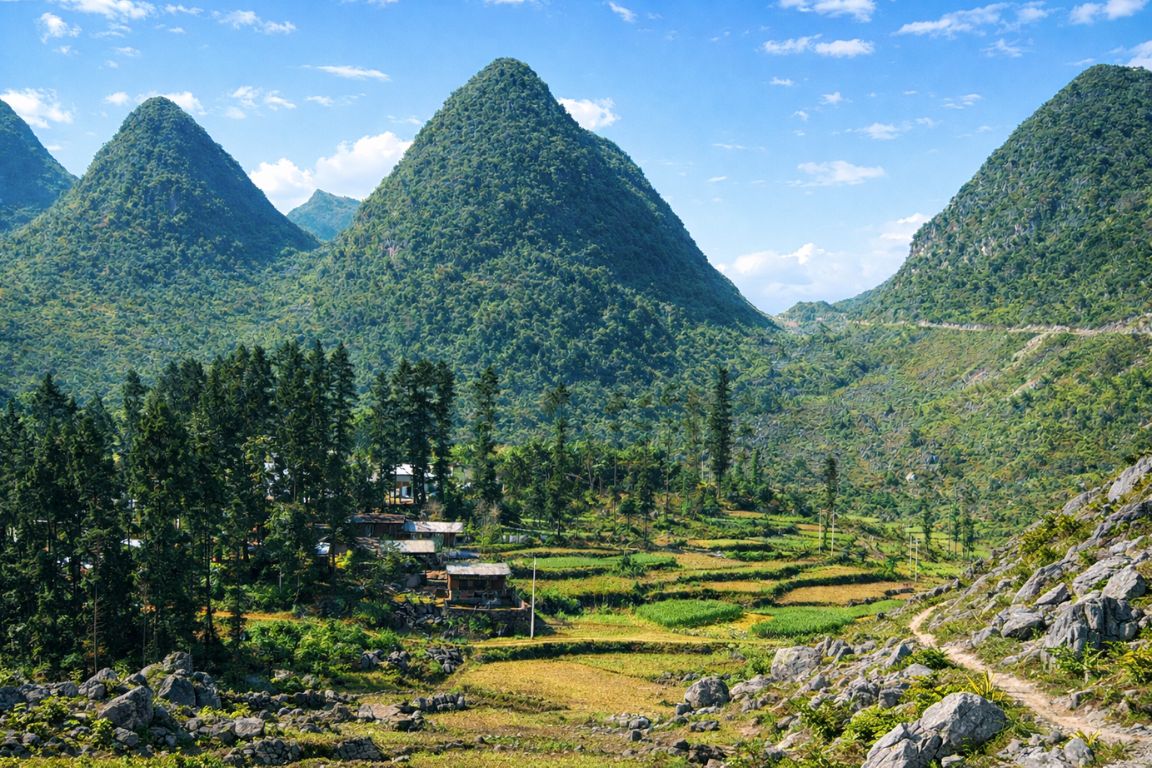
Heaven's Gate sits 40km from Ha Giang at around 1,400m elevation and delivers the loop's first genuine wow moment, a panorama over the twin cone-shaped Núi Đôi Cô Tiên, the "fairy mountains," rising from a terraced valley below. Every rider stops here; nobody rides past it.
Give it 20 to 30 minutes at minimum, enough time to reach the main platform and get the classic shot. Photographers who want to work multiple angles from the lower viewing levels or wait out cloud movement should plan closer to 45 to 60 minutes. Morning light between roughly 8 and 11am generally produces better photos than the flatter, harsher light of midday.
Facilities are basic but present: vendors selling drinks and snacks, toilets of variable cleanliness, and a large parking area that fills up fast during October's peak season. Outside of peak months, expect a fraction of the crowd and considerably more room to actually enjoy the view.
Ma Pi Leng Pass: The Absolute Centerpiece
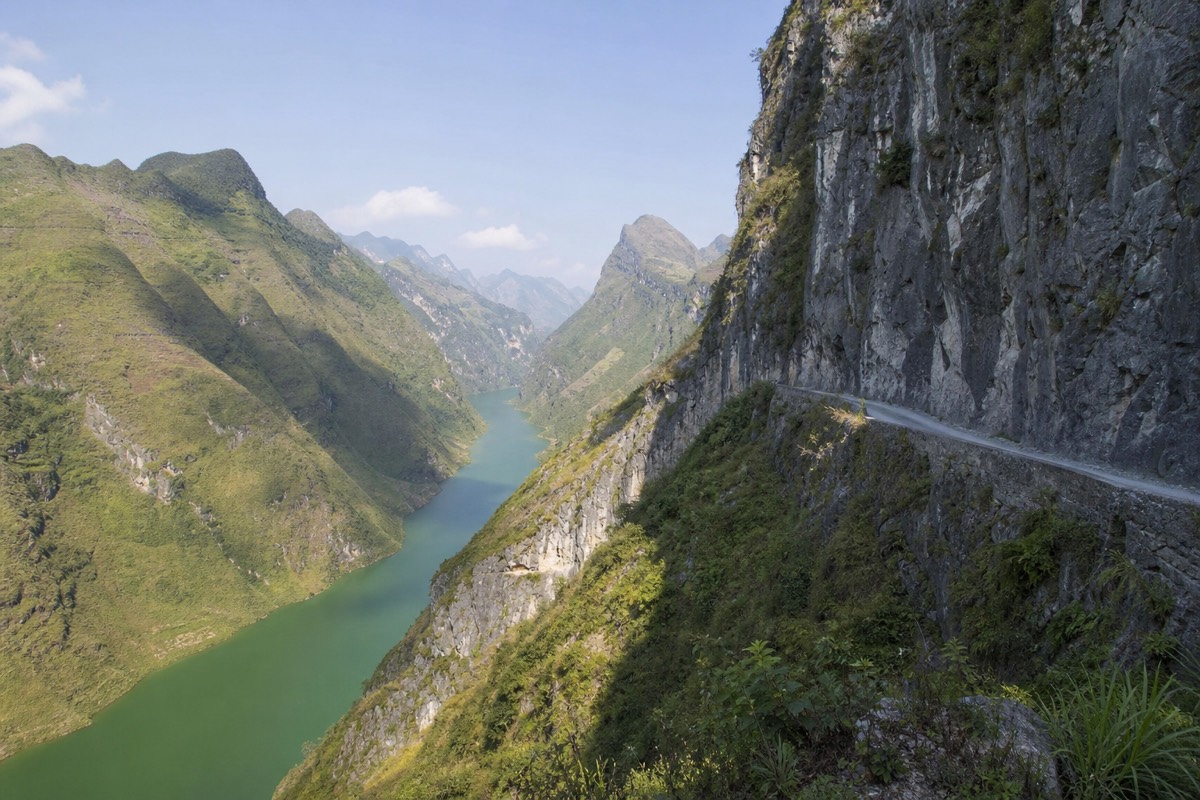
Ma Pi Leng Pass, 210km from Ha Giang and roughly 2,000m at its highest point, is the reason most people book this loop in the first place, a cliff-edge road carved into the mountainside above the Nho Que River canyon 1,200 meters below. Nothing else on the trip competes with it.
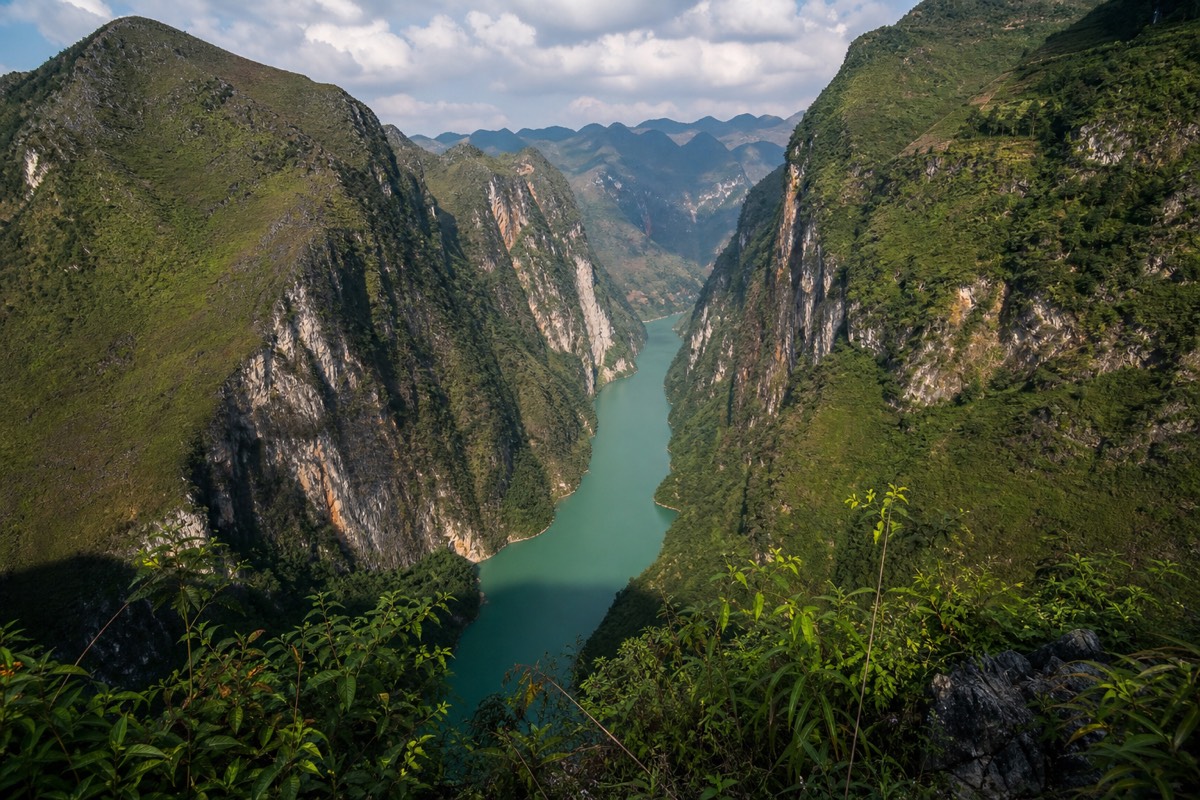
Budget at minimum 60 to 90 minutes, though most riders who've been there will tell you two hours or more is worth finding room for. Multiple viewpoints along a roughly 10 to 15km stretch offer different angles: the main upper platform gives the classic sweeping shot of road, canyon, and river together, while lower pullouts closer to Meo Vac show the serpentine road from different perspectives.
The tradeoff between rushing and lingering here is real, not just marketing language. Riders who allocate 45 minutes tend to describe the stop afterward with some version of "I wish I'd had more time." Riders who give it two or three hours, spread across several viewpoints under changing light, describe it as the single best decision of the trip. If your itinerary has any flexibility at all, spend it here.
Dong Van Old Quarter: Cultural Highlight
Dong Van, 190km from Ha Giang and the loop's second-largest town after Ha Giang itself, has a preserved old quarter of narrow stone streets and traditional houses worth an hour or two of wandering, and it doubles as most itineraries' Day 2 overnight stop.
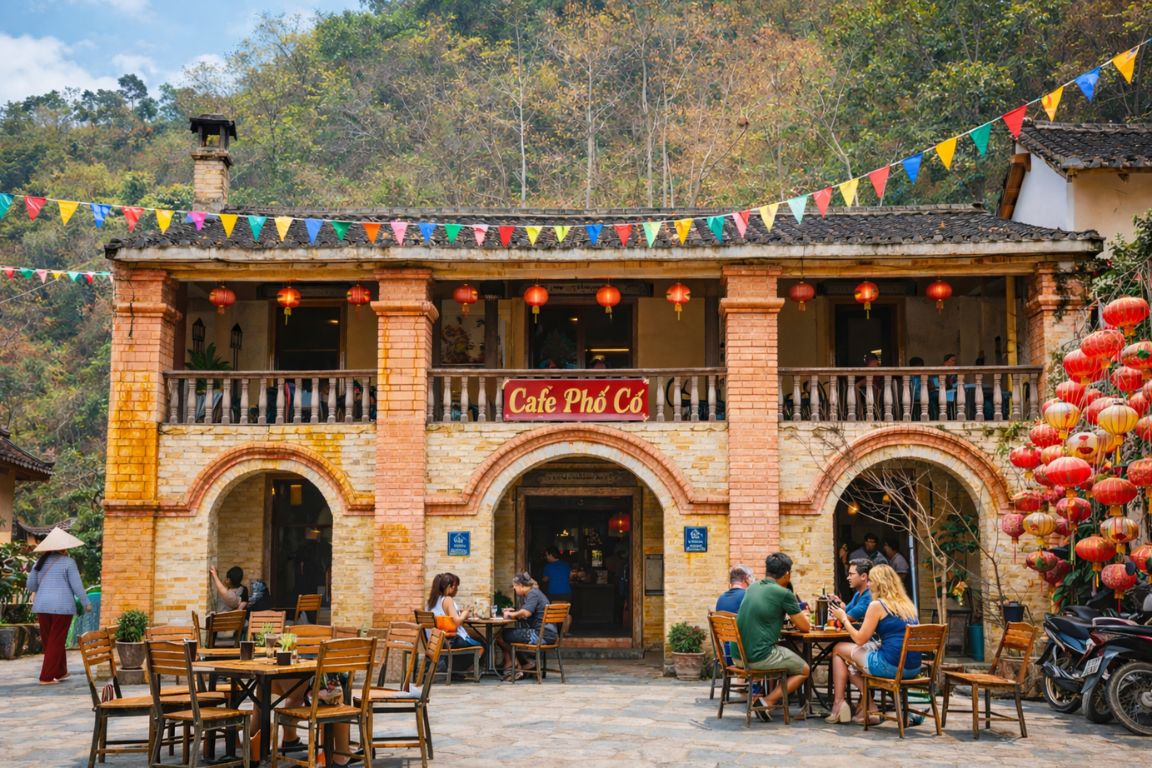
An hour to two hours covers a satisfying walkthrough, though the town rewards a second pass after dinner when the streets take on a different, quieter character. French colonial influence shows in some of the older shophouses, layered against traditional Hmong stone construction using the region's own limestone.
If your dates line up with a Sunday, the early-morning market (roughly 5 to 8am) is worth planning your overnight around. It's a genuine trading market for surrounding Hmong, Tay, and Dao communities, not a tourist performance, and traditional dress is most visible in the earliest hours before it winds down mid-morning.
If you're still working out your route around Ha Giang, this trip-planning guide for the loop covers what to sort out before you leave, from permits to what to pack.
Vuong Palace: The Hmong King's Mansion
Vuong Palace, 175km from Ha Giang and just 15km before Dong Van, is a former Hmong ruler's compound that makes for a worthwhile 30 to 45-minute stop if you have any interest in the region's history, though it's a recommendation rather than a requirement.
Entry runs $3 to $5 in cash, including a basic guided walkthrough covering the family's history, the compound's opium-trade origins, and its French colonial connections. It's a genuinely unusual piece of history: a Hmong clan leader who built substantial wealth and a fortified residence in a region where most ethnic minority settlements are far more modest.
The stop sits directly on route with obvious signage, so it costs you almost no extra riding to include it. Skip it only if you're already tight on time before Dong Van, since the karst scenery on either side of it deserves attention too.
Karst Plateau Viewpoints
The Yen Minh-to-Dong Van stretch runs through Ha Giang's most distinctive geology, gray limestone karst formations with no single named viewpoint but dozens of worthwhile pullouts, best covered with three to five short stops of 10 to 20 minutes each.
There's no wrong way to do this one. Unlike Heaven's Gate or Ma Pi Leng, the karst plateau doesn't have a single mandatory stop, which means you can be as thorough or as efficient as your schedule allows. A guide who's ridden this stretch dozens of times will usually know which unnamed pullouts produce the best photos under current light, which is one real advantage of a guided trip over riding solo through this section.
What you're looking at is genuinely unusual terrain: vertical limestone pinnacles, stone forests, and barren gray mountainsides that read more like photographs of the moon than typical Southeast Asian mountain scenery. It's the reason geologists and photographers put Ha Giang on their list independent of the pass or the villages.
Nho Que River Boat Trip
The Nho Que boat trip, arranged from Meo Vac or at pass viewpoints for $10-15 per person, gives you the reverse view of Ma Pi Leng, looking up from the canyon floor at the cliff road 1,200 meters above, but it's a genuine extra rather than something most riders need.
Total time commitment runs 2 to 3 hours once you count transport to the river access point, against about an hour actually on the water. That math makes it a better fit for 4-day itineraries with slack built in than tight 3-day loops.
Weather affects it directly: heavy rain or a very dry stretch can shut boats down entirely, so treat it as a nice-to-have you confirm locally rather than something to build a whole day's schedule around.
Lung Cu Flag Tower: Optional Detour
Lung Cu Flag Tower marks Vietnam's northernmost point, a 50km round trip detour from Dong Van that costs 2 to 3 hours for a modest monument and moderate views, worth it mainly for the symbolic value rather than the scenery itself.
Compare that against Ma Pi Leng's payoff for a similar time investment and it's clear why most riders on a standard 3-day loop skip Lung Cu. If you're running a 4 or 5-day itinerary with room to spare, or the northernmost-point idea genuinely appeals to you, it's a reasonable addition. Otherwise, that time is better spent at the pass.
What Other Stops Are Worth Knowing About?
Ethnic minority villages scattered along the route and the Sung La valley section between Yen Minh and Dong Van both reward spontaneous stops of 10 to 30 minutes without needing to be planned in advance.
Villages appear throughout the ride, offering brief, genuine glimpses of daily mountain life rather than staged tourist encounters. Sung La valley, within the broader karst plateau stretch, adds panoramic viewpoints if you're already stopping frequently through that section anyway.
None of these carry the "essential" label the way Heaven's Gate or Ma Pi Leng do. Treat them as bonus stops for whenever the road opens up and something catches your eye, not as fixed points on an itinerary.