How to Plan a Ha Giang Loop Trip

Last updated: February 10, 2026

Travelers planning Ha Giang Loop trips frequently express overwhelming confusion about practical logistics including which route to follow, whether renting motorbikes or hiring cars makes sense, how many days to allocate, what permits are required, when optimal seasons occur, and whether booking organized tours or going independently delivers better experiences. Some visitors arrive Ha Giang city without plans assuming they’ll figure out details on arrival, discovering peak season accommodation fully booked and quality motorbikes already rented, while others obsess over perfect itineraries spending weeks researching contradictory advice unable to make decisions. The planning paralysis stems from limited English information about this remote northern Vietnam region, rapidly changing road conditions and tourism infrastructure, and genuine complexity distinguishing between necessary preparations versus optional considerations.

At Ha Giang Tours, our local guides have helped thousands of travelers plan successful loop trips over many years, understanding which logistics matter most versus unnecessary worries, knowing current road conditions and seasonal variations, and providing practical wisdom eliminating confusion. This complete planning guide covers route basics explaining the 350km circuit through dramatic mountain passes and ethnic minority villages, optimal timing distinguishing peak seasons from periods to avoid, transportation choices comparing motorbikes versus cars versus organized tours, permit requirements and documentation, realistic budget planning across accommodation and activity tiers, and booking strategies for tours versus independent travel. We provide experienced local perspective helping you plan confidently rather than arriving unprepared or over-researching insignificant details while missing critical preparations.

Essential Ha Giang Loop Planning Overview

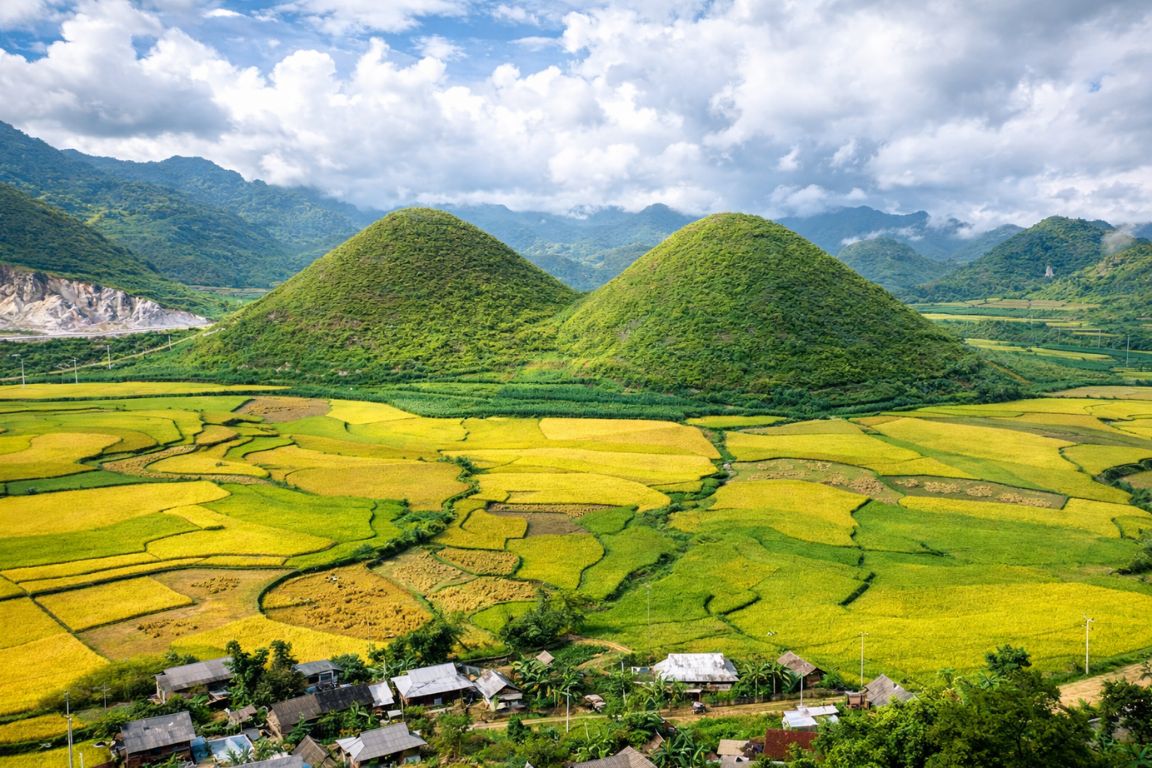
Fairy Breast Mountains at Heaven’s Gate Quan Ba overlooking golden rice fields and villages

Plan 3-4 days for the Ha Giang Loop riding semi-automatic motorbike or hiring car with driver, visiting during optimal seasons September-November (clear weather, buckwheat flowers) or March-May (moderate temperatures, spring blooms) avoiding rainy summer months and freezing winter conditions. The standard loop covers approximately 350km through spectacular mountain passes, traditional ethnic minority villages, and dramatic karst landscapes, requiring moderate physical fitness for long riding days, basic motorcycling skills for mountain roads, and flexibility adapting to weather and road conditions.

Route basics follow 350km circuit departing and returning to Ha Giang city, traveling counterclockwise through Quan Ba (Heaven’s Gate viewpoint), Yen Minh (rocky plateau), Dong Van (historic old quarter), Meo Vac (valley town), and Ma Pi Leng Pass (most scenic section overlooking Nho Que River) before returning via Du Gia. The loop traverses Vietnam’s northernmost mountains along Chinese border, climbing passes reaching 1,500-2,000 meters elevation, descending into deep valleys, and navigating winding mountain roads with spectacular scenery but challenging conditions requiring concentration and riding experience.

Key requirements include motorcycle license (International Driving Permit legally required though enforcement varies), border permits for certain areas near Chinese frontier (typically arranged by tour operators or accommodation), passport carried at all times for police checkpoints, and basic physical fitness handling 4-6 hour daily riding including steep climbs and descents. Travel insurance covering motorcycle accidents strongly recommended as medical facilities remain limited in remote areas, helmet use mandatory by Vietnamese law, and reasonable riding experience essential as roads feature steep grades, tight curves, and occasionally rough surfaces challenging novice riders.

Cost overview spans $30-50 daily for budget travelers using homestay accommodation ($5-15/night), local restaurants ($2-5/meal), and basic motorbike rentals ($5-10/day), totaling $90-200 for complete 3-4 day loop. Mid-range budgets of $60-100 daily cover guesthouse accommodation ($20-40/night), decent restaurants ($5-10/meal), quality bike rentals ($8-15/day), and occasional tours or activities, totaling $240-400 for full trip. Luxury travelers spending $150+/day stay boutique hotels ($80-150/night), hire private cars with drivers ($100-150/day), and enjoy premium dining, totaling $600+ for comprehensive comfortable experience.

Booking timeline requires 2-4 weeks advance notice for organized tours during peak season October-November when popular operators sell out, 1-2 weeks for accommodation booking in major towns (Dong Van, Meo Vac), but allows complete flexibility for independent DIY travelers comfortable booking accommodations day-by-day except during absolute peak periods. Summer low season and winter months permit last-minute planning with same-day bookings easily accomplished, while spring March-May requires moderate advance booking of 1-2 weeks securing preferred options without excessive lead time.

Practical recommendation suggests booking organized tours for first-time Vietnam visitors without motorcycling experience, solo female travelers wanting group safety, and anyone prioritizing convenience over flexibility, while experienced motorcycle riders comfortable navigating unfamiliar roads should choose independent DIY travel offering superior freedom and significantly lower costs. The tour-versus-independent decision depends primarily on riding ability and comfort with self-navigation rather than budget considerations, as tours provide essential support and guidance for inexperienced riders versus unnecessary hand-holding and inflexibility for confident motorcyclists.

Option Cost Per Day Freedom Level Riding Required Logistics Safety Support Best For
Budget DIY Motorbike $30-50 Complete – go anywhere, stop anytime Yes – ride own semi-auto bike Self-arranged everything None – handle own issues Experienced riders, budget travelers, flexibility priority
Mid-Range DIY $60-100 Complete freedom Yes – better bike, more comfort Self-arranged with better quality None – independent problem solving Confident riders wanting comfort without tours
Budget Group Tour $40-60 Limited – group pace/schedule Yes – ride in guided group All arranged by operator Guide support, mechanic backup First-timers, social travelers, basic guidance needed
Mid-Range Tour $80-120 Moderate – some flexibility Yes – quality bikes provided Comprehensive arrangements Full guide support, quality backup Comfort priority, moderate experience, want expertise
Car Hire with Driver $100-150 Moderate – no group constraints No – passenger only Self-arranged or packaged Driver knowledge only Non-riders, families, comfort priority, no bike skills
Luxury Private Tour $150-250+ High – private customization Optional – ride or drive Everything premium handled Dedicated guide, vehicle backup Maximum comfort, expert guidance, no budget constraints
Easy Rider Service $50-80 Moderate – passenger role No – experienced driver rides Arranged through operators Professional rider drives Want bike experience without riding, solo travelers, safety focus

What is the Ha Giang Loop? Understanding the Route

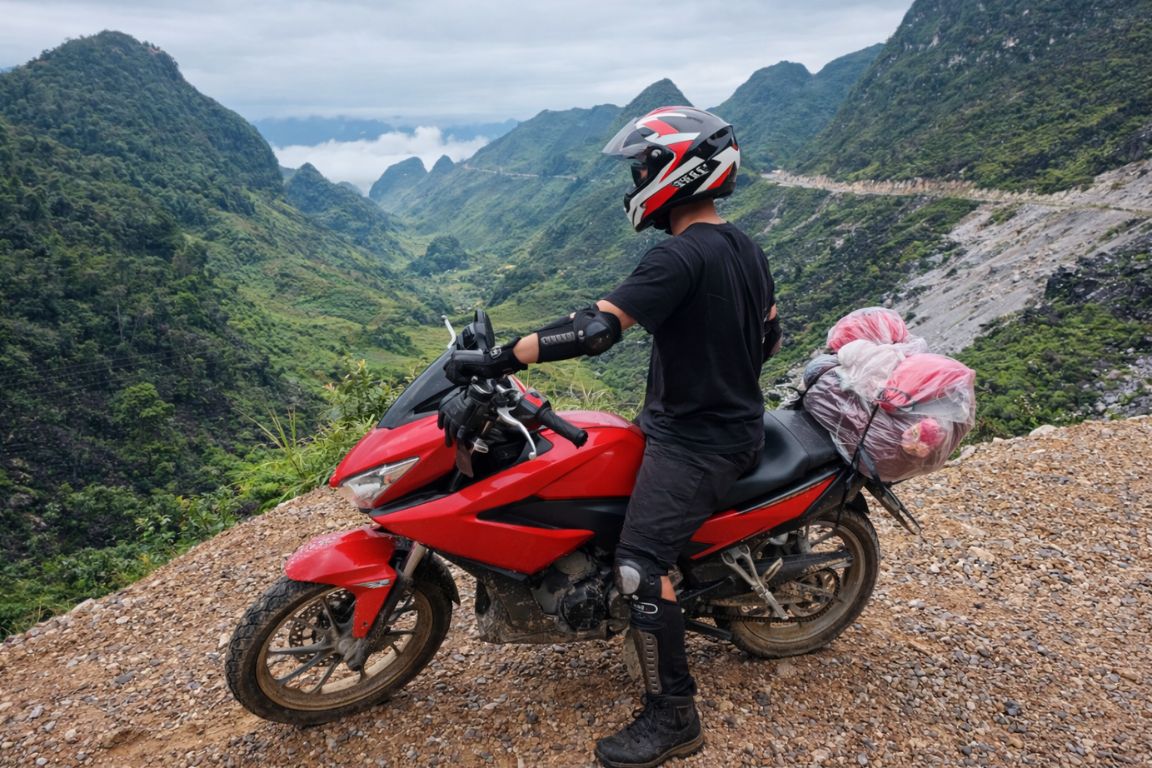
Motorcyclists riding a winding mountain road in Ha Giang Province

Route definition describes the Ha Giang Loop as approximately 350km circuit through Vietnam’s northernmost mountains, departing and returning to Ha Giang city while traversing dramatic limestone karst landscapes, winding mountain passes reaching 1,500-2,000 meters elevation, and remote ethnic minority villages along the Chinese border. The counterclockwise route follows QL4C highway through Quan Ba and Yen Minh, continues on QL4C to Dong Van, then QL4D to Meo Vac, before returning via smaller roads through Du Gia back to Ha Giang city. The circuit gained international fame through social media as one of the world’s most spectacular motorcycle journeys, combining challenging mountain riding with untouched cultural experiences and breathtaking scenery rivaling famous routes worldwide.

Major stops include Ha Giang city as starting/ending point with motorbike rentals, supplies, and accommodation, Quan Ba featuring Heaven’s Gate viewpoint overlooking twin fairy mountains and terraced valleys 40km from Ha Giang, Yen Minh as midpoint plateau town with basic services 100km into loop, Dong Van historic old quarter and Sunday market 190km from Ha Giang near Chinese border, Meo Vac valley town 260km from start known as gateway to Ma Pi Leng Pass, and Ma Pi Leng Pass itself as loop’s undisputed highlight with dramatic cliff-edge road overlooking Nho Que River canyon 1,500 meters below. Additional notable points include Lung Cu flag tower at Vietnam’s northernmost point (optional 25km detour from Dong Van), Pho Cao village traditional homestays, and numerous unnamed viewpoints along mountain passes offering spectacular photography opportunities.

We’ve got the Ha Giang tours route explained in detail so you know exactly what’s coming and where you’ll want to build in extra time.

Difficulty level rates as moderate requiring reasonable motorcycle experience but manageable for riders comfortable with mountain roads, steep grades, and basic off-road sections, though not suitable for complete beginners or nervous riders. The roads feature well-maintained paved surfaces on main routes with occasional rough patches, tight hairpin turns requiring controlled braking and acceleration, steep climbs and descents testing bike power and rider control, and narrow sections with drop-offs demanding concentration. Weather conditions significantly affect difficulty with rain creating slippery surfaces and reduced visibility, fog obscuring curves and hazards, and occasional landslides blocking roads during wet season requiring detours or delays. Experienced riders from sea-level environments should allow acclimatization time for high-altitude passes where thinner air affects both physical stamina and bike performance.

Best known for features Ma Pi Leng Pass as Vietnam’s most spectacular mountain road, carving along sheer cliff faces 1,200 meters above turquoise Nho Que River with hairpin switchbacks offering vertigo-inducing views described as “happiness road” in local language. The Dong Van karst plateau represents UNESCO Global Geopark showcasing 400-million-year-old limestone formations creating otherworldly rocky landscapes, traditional stone houses, and unique geological formations. Secondary highlights include ethnic minority villages where Hmong, Tay, and Lo Lo communities maintain traditional lifestyles, buckwheat flower fields blooming pink-purple October-November covering mountain slopes, and authentic cultural experiences far from mainstream Vietnamese tourism circuits.

Duration standard establishes 3-4 days as typical for covering complete loop with reasonable pace allowing photo stops, cultural exploration, and rest breaks, with 3-day itineraries riding approximately 100-120km daily and 4-day trips reducing to 80-100km daily distances. Two-day options exist for time-constrained travelers but require extremely rushed schedule riding 170-180km days, limited stops, and exhausting pace missing most scenic opportunities and cultural interactions. Extended 5-7 day itineraries allow relaxed exploration including side valleys, extended village stays, additional viewpoint detours, photography sessions, and recovery time between riding days, suiting photographers, cultural enthusiasts, and travelers prioritizing quality over speed. The flexible route accommodates various schedules though 4 days represents optimal balance for most visitors between comprehensive coverage and reasonable time investment.

Best Time to Visit: Seasonal Considerations

3-Day/2-Night Private Car Tour: English-Speaking Driver + Private Rooms

Peak seasons for Ha Giang Loop occur September-November when post-monsoon clear weather, comfortable temperatures (18-28°C / 64-82°F daytime), spectacular buckwheat flower blooms covering October-November mountain slopes in pink-purple carpets, and golden rice terraces during September-October harvest create optimal conditions. The secondary peak runs March-May featuring spring temperatures (15-25°C / 59-77°F), blooming plum and peach blossoms February-March, renewed green landscapes after winter dormancy, and moderate crowds versus autumn’s intensity. Both periods deliver reliable dry weather minimizing rain disruptions, clear visibility for mountain vistas, comfortable riding temperatures neither too hot nor freezing, and scenic highlights making photography exceptional.

Weather by season divides into dry season October-April with minimal rainfall, clear skies, and predictable conditions though varying temperatures from pleasant autumn/spring to cold winter, versus rainy season May-September bringing afternoon thunderstorms, occasional all-day rain, increased landslide risks, and challenging riding conditions. December-February winter months feature cold temperatures (5-15°C / 41-59°F) at high elevations with occasional frost, thick morning fog reducing visibility, and genuinely freezing conditions requiring heavy clothing for motorcycle riding. Summer June-August combines heat (25-35°C / 77-95°F in valleys) with heavy rainfall, humid conditions, and frequent afternoon storms making roads slippery and increasing accident risks while reducing scenic visibility through cloud cover and haze.

Crowd levels peak dramatically in October when domestic Vietnamese tourists, international travelers, and photography enthusiasts converge for buckwheat season, creating accommodation shortages in Dong Van and Meo Vac, crowded viewpoints at Ma Pi Leng Pass, and dozens of motorbikes on popular routes simultaneously. September and November show moderate crowds with comfortable tourist numbers allowing easy accommodation booking and uncrowded attractions, while March-May spring season attracts moderate visitors primarily international travelers versus October’s domestic tourist surge. Summer rainy months June-August represent quietest periods with minimal tourists accepting weather risks for solitude, though December-January also show low crowds as freezing temperatures deter most visitors.

Avoid periods include December-January when freezing temperatures (0-10°C / 32-50°F) at passes, thick persistent fog limiting visibility to 20-50 meters, icy road conditions creating dangerous riding, and genuine cold requiring winter gear make loop unpleasant and potentially dangerous. June-August rainy season brings heavy downpours, landslide risks blocking roads and requiring detours or delays, slippery surfaces increasing accident probability, reduced visibility through rain and clouds obscuring scenic vistas, and overall challenging conditions requiring experienced all-weather riding skills. The extreme weather during these periods doesn’t make loop impossible but significantly reduces enjoyment and safety margins compared to optimal seasons.

Practical recommendation identifies late September through early November as absolutely optimal window combining perfect weather (clear, mild, stable), spectacular buckwheat flowers at peak bloom, golden rice harvest terraces, comfortable temperatures for all-day riding, and manageable crowds before mid-October domestic tourist surge. Within this period, late September-early October represents sweet spot with flowers beginning bloom, fewer tourists than mid-October peak, guaranteed good weather, and overall ideal conditions. March-April provides secondary excellent option for travelers unable to visit autumn, delivering comfortable temperatures, spring blooms, and good weather though lacking buckwheat flowers’ dramatic impact.

Planning ahead? Our guide to the best time to visit Ha Giang tours breaks down each season and what you’ll actually experience on the roads.

Month Weather Temperatures (Day/Night) Crowds Road Conditions Scenery Highlights Recommendation
January Dry, very cold, fog 8-15°C / 2-8°C (46-59°F / 36-46°F) Very low Good when clear, icy patches Winter landscapes, frost Avoid – too cold
February Dry, cold, occasional fog 10-18°C / 5-10°C (50-64°F / 41-50°F) Low Good, improving Plum blossoms starting Marginal – still cold
March Dry, mild, clear 15-23°C / 10-15°C (59-73°F / 50-59°F) Moderate Excellent Peach/plum blossoms, spring green Excellent option
April Dry, warm, clear 18-26°C / 12-18°C (64-79°F / 54-64°F) Moderate Excellent Spring landscapes, comfortable Excellent option
May Transitional, some rain 20-28°C / 15-20°C (68-82°F / 59-68°F) Low-moderate Good, occasional wet Green landscapes, flowers Good – early month best
June Rainy, hot in valleys 22-32°C / 18-23°C (72-90°F / 64-73°F) Low Fair – landslide risks Lush green, waterfalls Avoid – heavy rain
July Rainy, hot and humid 23-33°C / 20-24°C (73-91°F / 68-75°F) Very low Poor – frequent rain Very green, dramatic clouds Avoid – peak rain
August Rainy, hot 22-32°C / 19-23°C (72-90°F / 66-73°F) Low Fair – improving Green landscapes Marginal – still rainy
September Dry, pleasant 18-28°C / 14-20°C (64-82°F / 57-68°F) Moderate Excellent Rice harvest, buckwheat starting Excellent – ideal
October Dry, perfect 16-26°C / 12-18°C (61-79°F / 54-64°F) Very high Excellent Buckwheat flowers peak, terraces BEST – peak crowds
November Dry, cooling 12-22°C / 8-14°C (54-72°F / 46-57°F) Moderate Excellent Late buckwheat, autumn colors Excellent – fewer crowds
December Dry, cold, fog 8-18°C / 3-10°C (46-64°F / 37-50°F) Low Good when clear, fog issues Winter clarity when clear Avoid – getting cold

Choosing Your Transportation: Motorbike vs Car vs Tour

2-Day/1-Night Ha Giang Open-Air New Model Jeep Tour

Motorbike (semi-automatic) provides authentic Ha Giang Loop experience with complete freedom stopping anywhere for photos, exploring side roads, and riding at personal pace while feeling wind, temperature changes, and mountain atmosphere impossible from enclosed vehicles. The semi-automatic transmission (Honda Wave, Yamaha Exciter) eliminates clutch operation simplifying riding on steep grades and tight curves, making them accessible for riders with basic automatic scooter experience though still requiring motorcycle handling skills for mountain conditions. Rentals cost $5-10 daily, require International Driving Permit legally (though enforcement varies), and demand physical fitness for 4-6 hour riding days including steep climbs testing leg strength and concentration navigating challenging sections. The freedom and immersion make motorbikes overwhelmingly popular choice for Ha Giang Loop despite moderate risks and physical demands.

Motorbike (manual) with clutch and gear shifting provides superior control on steep mountain grades, better engine braking descending passes, and overall more responsive handling for experienced riders comfortable with manual transmission mechanics. The manual bikes (Honda XR, Yamaha R15) allow downshifting for steep climbs maintaining power and momentum, precise speed control on descents preventing brake overheating, and overall confidence tackling challenging sections where semi-automatic bikes sometimes struggle. Manual rentals cost $8-15 daily, require significant prior riding experience as learning manual transmission on mountain roads proves dangerous, and suit confident motorcyclists prioritizing performance over ease of use. First-time manual riders should not attempt Ha Giang Loop for initial manual transmission learning due to steep consequences of control errors.

Car with driver eliminates riding challenges entirely through comfortable 4-wheel vehicle with experienced local driver navigating roads, allowing passengers enjoying scenery without concentration demands, accommodating families or groups together, and providing protection from weather and road hazards. The cars (typically 4-seat sedans or 7-seat SUVs) cost $80-150 daily for vehicle and driver, split among passengers making per-person costs reasonable for 3-4 travelers, though still exceeding motorbike expenses. Disadvantages include reduced immersion missing wind-in-face motorcycle experience, inability stopping spontaneously at every viewpoint without inconveniencing driver, and less authentic adventure feeling versus riding yourself through mountains. Cars suit elderly travelers, families with children, visitors without riding skills, or those prioritizing comfort over authentic motorcycle adventure.

Organized tours bundle transportation (riding in guided motorcycle group or traveling by tour vehicle), accommodation, meals, guide services, and permits into single package handling all logistics while providing social group dynamics, local expertise, and safety backup through guide support and mechanic assistance. Budget group tours ($40-60 daily) use basic homestays and restaurants with 8-15 participants following set itineraries, mid-range tours ($80-120 daily) offer better accommodation and smaller groups (4-8 people) with some flexibility, while private tours ($150-250+ daily) provide dedicated guide and customized routing for 1-4 people. Tours eliminate planning stress, provide cultural context through guide interpretation, offer group camaraderie for solo travelers, but sacrifice freedom through fixed schedules, group pace compromises, and inability spontaneously changing plans based on weather or personal preferences.

A British couple on first Vietnam trip rented semi-automatic bikes attempting Ha Giang Loop despite limited riding experience, struggling with steep grades requiring frequent stops to rest shaking legs, misjudging curves resulting in minor slide (no injuries), and feeling constantly stressed about navigation and road conditions rather than enjoying scenery. They completed loop but questioned whether tour would have been better choice given stress levels. Meanwhile, Australian rider with 10 years motorcycle experience including mountain touring found semi-automatic bike adequate for all sections, stopped frequently at unmarked viewpoints discovering hidden valleys, adjusted daily distances based on weather and energy, and described loop as perfectly matched to independent experienced rider wanting complete freedom.

Trying to decide how independent to go? Our guide on guided Ha Giang tours vs self-ride shows you the tradeoffs on cost, flexibility, and safety.

Factor Semi-Auto Motorbike DIY Manual Motorbike DIY Car with Driver Budget Group Tour Mid-Range Tour
Cost Per Day $30-50 $35-60 $100-150 (total, split among passengers) $40-60 $80-120
Riding Skills Required Basic motorcycle, some experience Advanced motorcycle, manual transmission None – passenger only Basic to moderate Basic to moderate
Freedom/Flexibility Complete – go anywhere, anytime Complete – maximum control Moderate – driver dependent Low – fixed group schedule Moderate – some flexibility
Physical Demand High – 4-6 hours daily riding High – requires strength and stamina None – passive passenger Moderate – guided riding Moderate – guided riding
Safety/Support None – handle own issues None – independent problem solving Driver knowledge, vehicle safety Guide support, group backup, mechanic Professional guide, better backup
Cultural Immersion High – direct local interaction High – independent exploration Moderate – filtered through driver High – guide provides context High – expert cultural insights
Social Aspect Solo or self-arranged groups Solo or self-arranged groups Private group only Social group dynamics Small group camaraderie
Navigation Self-navigate with maps/GPS Self-navigate with maps/GPS Driver handles navigation Guide leads group Guide leads, some input
Accommodation Self-booked or spontaneous Self-booked or spontaneous Self-arranged separately Included in package Better quality included
Best For Experienced riders, budget travelers, freedom priority Advanced riders, performance focus Non-riders, families, comfort seekers First-timers, social travelers, logistics support needed Comfortable budget, want expertise without full DIY
Experience Quality Authentic adventure, personal achievement Maximum riding satisfaction Scenic passive observation Guided learning, social fun Balanced comfort and adventure

Ha Giang Loop Duration: How Many Days You Need

Ha Giang Loop: 2-Day Luxury Motorbike Easy Rider Tour

2 days technically covers complete Ha Giang Loop circuit but requires extremely rushed schedule riding 170-180km daily, departing early morning 6-7am, riding straight through with minimal stops, arriving destinations after dark exhausted, and missing majority of scenic viewpoints, cultural interactions, and photography opportunities making loop famous. The punishing pace eliminates spontaneous detours to interesting villages, forces skipping secondary attractions and viewpoints requiring brief off-route diversions, and creates exhausting marathon riding leaving no energy for evening exploration or cultural experiences. Budget tour operators sometimes offer 2-day options appealing to time-constrained travelers, but participants consistently report regret at rushed pace missing what makes Ha Giang special beyond simply completing distance.

3 days represents standard duration most travelers and tour operators use, covering complete loop at moderate 100-120km daily pace allowing essential stops at Heaven’s Gate, Dong Van old quarter, Ma Pi Leng Pass viewpoints, and major attractions while maintaining reasonable 5-7 hour daily riding including photo breaks and lunch. The typical 3-day structure divides Ha Giang to Yen Minh (100km Day 1), Yen Minh to Dong Van (90km Day 2), Dong Van to Meo Vac via Ma Pi Leng then return to Ha Giang (160km Day 3), with final day’s longer distance compensated by morning Ma Pi Leng highlight and afternoon descent returning to city. The balanced itinerary works well for travelers with exactly one week in northern Vietnam, provides adequate coverage of major highlights, and maintains manageable daily riding without overwhelming novice riders or exhausting experienced motorcyclists.

4 days offers optimal duration for most visitors by reducing daily distances to comfortable 80-100km allowing relaxed pace with extended photo stops, side valley exploration, cultural village visits, and recovery time between riding days preventing accumulated fatigue. The extra day typically splits either Yen Minh to Dong Van leg adding Lung Cu flag tower detour and extended Dong Van exploration, or Meo Vac return leg with overnight Meo Vac stay and leisurely morning Ma Pi Leng Pass session during best light before afternoon return Ha Giang. Four-day schedules suit first-time motorcyclists adapting to mountain riding without pressure, photographers wanting golden hour opportunities at multiple locations, and travelers prioritizing quality experiences over maximum distance coverage.

5+ days extended itineraries allow comprehensive exploration including side valleys off main loop (Ba Be Lake combination, Hoang Su Phi terraces, Bac Sum Pass), multiple nights in favorite locations enabling deeper cultural immersion through extended homestay experiences, specialized activities like trekking or market visits, and genuinely relaxed pace with rest days recovering from riding. The additional time particularly benefits photographers scheduling sunrise/sunset sessions at key locations, cultural enthusiasts wanting meaningful village interactions beyond brief stops, and travelers combining Ha Giang with surrounding northern Vietnam attractions into comprehensive regional exploration. Extended stays reduce per-day costs through longer bike rentals and spreading fixed expenses across more days.

Daily distance considerations recognize that 80-120km mountain riding requires 4-7 hours actual travel time depending on road conditions, stops, and rider experience, with winding passes, steep grades, and photo-worthy viewpoints making progress substantially slower than equivalent flat highway distances. The mountain roads rarely allow sustained speeds above 30-40 km/h due to curves, grades, and road surface conditions, with frequent stops for photos, rest breaks, and cultural sites adding 1-3 hours to pure riding time making even modest 100km days consume full morning through mid-afternoon. First-time mountain riders consistently underestimate time requirements, planning overly ambitious daily distances then discovering reality requires adjustment to more conservative pacing.

Practical recommendation establishes 4 days as ideal duration for first-time Ha Giang Loop visitors, balancing comprehensive coverage of all major highlights with comfortable daily pacing preventing exhaustion, allowing flexibility for weather or mechanical delays, and providing adequate time for cultural experiences and photography beyond pure transportation between destinations. Three days works adequately for experienced riders comfortable with moderate distances and limited stops, while 5+ days suits photographers, cultural enthusiasts, and relaxed travelers without time pressure. Budget minimum 3 days refusing 2-day options regardless of time constraints, as rushed schedules miss essential Ha Giang experiences making trip worthwhile.

Planning your itinerary? This breakdown of how many days you need in Ha Giang tours shows you what’s possible with 3, 4, or 5 days on the loop.

Standard 3-4 Day Itinerary Options

Iconic Heaven’s Gate (Quan Ba) in Ha Giang with limestone mountains and scenic stairway

Day 1: Ha Giang to Yen Minh via Quan Ba covers approximately 100km over 4-5 hours riding, departing Ha Giang city after breakfast and bike pickup, climbing immediately to Quan Ba Heaven’s Gate viewpoint (25km, 1 hour) overlooking twin fairy mountains and terraced valleys for essential photo stop, continuing through Tam Son town to Yen Minh plateau (additional 75km, 3-4 hours) passing ethnic minority villages and dramatic karst landscapes. The opening day establishes loop’s character through mountain riding introduction without overwhelming difficulty, spectacular scenery immediately rewarding early efforts, and manageable distance allowing afternoon arrival Yen Minh with time for town exploration and rest before dinner. Key stops include Heaven’s Gate mandatory viewpoint, Lung Tam weaving village optional cultural detour, and numerous unnamed scenic overlooks photographers find irresistible.

Day 2: Yen Minh to Dong Van via rocky plateau traverses 90km over 4-5 hours through otherworldly limestone karst terrain, riding across high plateau featuring distinctive gray rocky mountains, traditional Hmong villages with stone houses, and increasingly dramatic scenery approaching Chinese border at Dong Van. The route follows excellent paved road through Sung La valley with multiple viewpoint stops, passes Vuong family mansion (historic H’mong king’s palace worth 30-minute tour), and enters Dong Van town nestled in mountain valley with preserved old quarter and Sunday morning market (time visit accordingly if possible). The moderate distance and relatively gentle grades make Day 2 less physically demanding than other legs, allowing focus on cultural attractions and photography versus pure riding challenge.

Day 3: Dong Van to Meo Vac via Ma Pi Leng Pass covers just 70km but requires 3-4 hours as route includes Ha Giang Loop’s absolute highlight, the spectacular Ma Pi Leng Pass carving along sheer cliff faces 1,200 meters above emerald Nho Que River with dozens of hairpin switchbacks and vertigo-inducing viewpoints. The shorter distance allows extended time at Ma Pi Leng stopping frequently for photography, optional Nho Que River boat trip (1 hour, $10-15), and simply absorbing spectacular scenery without rushing through most memorable loop section. Meo Vac arrival by early afternoon provides time exploring valley town, visiting viewpoints above town, or relaxing at accommodation recovering from emotional intensity of Ma Pi Leng experience.

Day 4 (if doing 4-day): Meo Vac to Ha Giang via Du Gia completes loop’s longest single-day leg at 120km over 5-6 hours, departing Meo Vac early morning retracing Ma Pi Leng Pass briefly before branching south through less-traveled roads via Du Gia, Pho Cao, and eventually rejoining main highway back to Ha Giang city. The return route through Du Gia offers alternative scenery versus backtracking Day 1-2 roads, passes through remote villages seeing fewer tourists, and provides satisfying sense of completing full circuit arriving Ha Giang where loop began. The longer distance requires mental preparation and early start, though descending terrain throughout day makes riding less demanding than equivalent distance climbing passes, with afternoon arrival Ha Giang city allowing evening celebration meal and bike return before departing region next day.

Alternative routes include northern variation adding Lung Cu flag tower detour from Dong Van (25km each way, Vietnam’s northernmost point, Chinese border views, adds 2-3 hours to Day 2), eastern return via Bac Sum Pass instead of Du Gia route (similar distance, different scenery, less traveled), combining Ha Giang Loop with Ba Be Lake extension (additional 2-3 days, 150km extra distance, beautiful lake and waterfall attractions), or Hoang Su Phi terrace integration (2-day addition, spectacular rice terraces September-October, less developed tourism). The flexible route accommodates various interests with photographers often adding extra stops and days for optimal light, cultural enthusiasts detouring to specific villages, and time-constrained travelers streamlining to essential highlights only.

If you’re torn between itinerary lengths, here’s our honest comparison of 3-Day vs 4-Day vs 5-Day in Ha Giang tours based on what you’ll actually cover with each.

Accommodation Along the Route

Types range from traditional homestays at $5-15 nightly providing basic rooms in local family houses with shared bathrooms and simple amenities, guesthouses at $15-30 offering private rooms with en-suite bathrooms and modest comfort upgrades like hot water and WiFi, and small hotels at $30-80 featuring more reliable comfort standards including air conditioning or heating, better mattresses, and consistent hot water. The homestays predominate in smaller villages between main towns, appealing to budget travelers and cultural enthusiasts wanting authentic experiences, while guesthouses concentrate in Yen Minh, Dong Van, and Meo Vac serving mid-range travelers seeking comfort without luxury prices. Hotels remain limited mostly to Ha Giang city and increasingly Dong Van where tourism development supports higher-end properties, though even “hotels” in remote mountains maintain modest standards compared to urban Vietnamese accommodations.

Booking advance requires 1-2 weeks notice during peak season October when buckwheat flower tourists overwhelm limited Dong Van and Meo Vac accommodation, with popular homestays and better guesthouses fully booked forcing late planners into inferior options or scrambling between properties seeking vacancies. September and November shoulder seasons need moderate 3-5 day advance booking securing preferred choices without excessive lead time, while off-season months May-August and December-February allow complete flexibility with same-day walk-in bookings easily accomplished given minimal tourist competition. The booking strategy for independent travelers balances securing first night Ha Giang accommodation before arrival with maintaining flexibility for subsequent nights adjusting to weather, road conditions, or personal pacing preferences.

Major towns providing most accommodation concentration include Ha Giang city as loop starting point with dozens of hotels and guesthouses ($10-60), Yen Minh as Day 1 overnight stop with 15-20 guesthouses and homestays ($8-25), Dong Van as cultural center and Day 2 stop offering 25+ options from homestays through boutique hotels ($10-80), and Meo Vac as Day 3 option with 12-15 properties mostly guesthouses ($12-30). The smaller villages between major towns (Quan Ba, Tam Son, Pho Cao) offer limited homestay options appealing to travelers wanting quieter locations and deeper cultural immersion versus busy town convenience, though facilities remain more basic and English communication proves challenging without Vietnamese language skills or tour guide assistance.

Homestay experience delivers authentic cultural immersion staying with ethnic minority families (typically Hmong or Tay), sharing meals with hosts featuring local specialties like thang co soup and corn wine, sleeping in simple rooms with basic mattresses and mosquito nets, using squat toilets and bucket showers, and experiencing daily village life impossible at commercial properties. The homestays foster genuine cross-cultural exchanges through meal sharing and casual interactions, provide income directly to remote mountain communities, and create memorable personal connections many travelers rate as trip highlights despite basic facilities. Expectations should align with remote mountain living standards rather than hotel comfort, accepting cold water, hard beds, limited privacy, basic food, and occasional livestock noises as authentic elements rather than deficiencies.

Quality standards vary dramatically across Ha Giang Loop properties from excellent well-maintained homestays with clean facilities and welcoming hosts through mediocre guesthouses with indifferent service and minimal upkeep to occasional poor options with dirty bathrooms and broken amenities travelers regret booking. The remote mountain location, limited construction standards, basic infrastructure, and relative tourism development immaturity mean even higher-priced properties sometimes disappoint visitors expecting equivalent quality to urban Vietnamese hotels at similar prices. Manage expectations understanding hot water may be intermittent, WiFi often unreliable or absent, English communication limited, breakfast options basic, and overall comfort modest even at better properties, with these limitations accepted as reasonable trade-offs for spectacular mountain location and authentic experiences.

Don’t leave accommodation to chance up here. This breakdown of where to stay in Ha Giang tours shows you the best options before you set off on the loop.

Accommodation Type Price Range Bathroom Comfort Level Cultural Experience Location Best For
Village Homestay $5-15 Shared, basic, cold water, squat toilet Basic – hard beds, minimal amenities, no heating/AC High – family meals, daily life immersion, local interactions Small villages between towns Budget travelers, cultural enthusiasts, authentic experience priority
Town Homestay $10-20 Private or shared, basic hot water Basic to modest – simple rooms, fans, mosquito nets Moderate – some family interaction, local setting Yen Minh, Dong Van, Meo Vac Budget travelers wanting cultural experience with more comfort
Budget Guesthouse $15-25 Private en-suite, inconsistent hot water Modest – basic beds, fans, simple furniture, limited maintenance Low – commercial property, minimal interaction All major towns Mid-budget travelers, comfort over cultural immersion
Mid-Range Guesthouse $25-40 Private en-suite, reliable hot water Moderate – comfortable beds, heating/AC, WiFi, better maintenance Low – professional operation Ha Giang, Dong Van primarily Comfortable budget, reliable amenities priority
Small Hotel $30-60 Private modern bathroom, consistent hot water Good – quality beds, climate control, WiFi, breakfast included Low – standard hotel service Ha Giang city mainly, some in Dong Van Comfort priority, reliable standards needed
Boutique Hotel $60-80+ Modern private bathroom, full amenities High – quality furnishing, mountain views, restaurant Low to moderate – professional with local design touches Ha Giang, Dong Van limited options Maximum comfort, willing pay premium for quality

Budget Planning: How Much Does It Cost?

Motorbike rental costs $5-10 daily for semi-automatic bikes (Honda Wave 110cc, Yamaha Sirius) from reputable Ha Giang city rental shops, with 3-day rentals typically totaling $15-30 including helmet and basic insurance covering theft but not accident damage or medical costs. Manual transmission bikes (Honda XR 150cc, Yamaha Exciter 155cc) command premium $8-15 daily rates reflecting better performance and newer condition, with total 3-day costs reaching $24-45. The rental prices include helmet and sometimes phone mount or tank bag, require passport deposit or $100-200 cash deposit, and assume bike returns in similar condition to departure with damage charges deducted from deposits. Budget an additional $20-50 potential damage buffer for minor scratches, broken mirrors, or cosmetic issues commonly occurring on mountain roads even with careful riding.

We’ve covered motorbike safety in Ha Giang tours in detail so you know what gear matters, what road conditions to watch for, and how to handle the mountain sections.

Fuel costs total just $15-20 for complete Ha Giang Loop as small 110-150cc bikes deliver exceptional 40-50 km/liter efficiency, with 350km circuit requiring approximately 7-9 liters at $2-2.50 per liter Vietnamese fuel prices. The minimal fuel expense represents one of Ha Giang Loop’s budget advantages versus car travel, with single tank fillup in Ha Giang city before departure plus one or two small top-ups in Dong Van or Meo Vac covering entire journey. Carry $10-15 emergency fuel cash as credit cards don’t work at small rural petrol stations, and consider carrying 1-2 liter emergency fuel bottle for remote sections between towns though rarely necessary with planning.

Accommodation spans $5-15 nightly for basic homestays with shared facilities and family meals included, $15-30 for standard guesthouses with private bathrooms and hot water, $30-50 for comfortable guesthouses with reliable amenities and better maintenance, or $60-80+ for small hotels in Ha Giang city or Dong Van boutique properties. Budget travelers consistently using homestays spend $15-45 total accommodation for 3-day loop (3 nights), mid-range visitors preferring guesthouses allocate $50-90, while comfort-focused travelers budgeting $90-150 secure best available properties. Peak season October adds 20-30% premiums to listed prices with popular properties charging higher rates during buckwheat flower demand surge.

Meals cost $2-5 per basic meal at local restaurants and street food stalls serving pho, fried rice, and Vietnamese staples, $5-10 per meal at better restaurants with English menus and tourist-oriented dishes, or $3-7 for homestay family meals typically included with accommodation. Budget three meals daily plus snacks and drinks totaling $10-15 daily for budget eating, $20-30 daily for comfortable restaurant dining, or hybrid approach mixing cheap breakfasts and lunches with nicer dinners averaging $15-20 daily. The 3-day loop requires 9 meals total plus snacks, totaling $30-45 strict budget, $60-90 mid-range comfortable eating, or $90-120 consistently choosing best restaurant options and alcohol.

Permits and fees for border area access near Chinese frontier cost $10-30 when arranged independently through hotels or Ha Giang police office, though many independent travelers report completing loop without obtaining permits encountering no checkpoints or enforcement, while organized tours include permit costs in packages. The permit requirements remain somewhat unclear with enforcement varying by season and checkpoint staffing, creating uncertainty for DIY travelers who may pay unnecessarily or risk fines if checked. Additional fees include Ha Giang to Dong Van Geopark entry if stopped at official gate ($3-5, rarely collected), Lung Cu flag tower entry $1, and Nho Que River boat ride $10-15 if choosing optional Ma Pi Leng Pass addition.

Total budget estimates for 3-day Ha Giang Loop budget approach total $90-150 including bike rental $15-30, fuel $15-20, accommodation $15-45, meals $30-45, permits $10-20, and miscellaneous $10-20 for snacks/drinks/photos/emergencies. Mid-range comfortable 3-day budget reaches $180-300 with bike rental $24-45, fuel $15-20, better accommodation $50-90, restaurant meals $60-90, permits $10-20, and miscellaneous $30-50 for coffees/beers/souvenirs. Higher comfort budgets exceeding $300-400 add quality hotel nights, private guide services, support vehicle backup, premium bike rentals, and consistently upscale dining creating comprehensive comfortable experience at 3-4x budget approach costs.

Expense Category Budget (per day) Mid-Range (per day) Comfortable (per day) Notes
Motorbike Rental $5-10 $8-12 $12-15 Semi-auto vs manual, bike quality varies
Fuel $5-7 $5-7 $5-7 Same for all – bikes very efficient
Accommodation $5-15 $15-30 $40-60 Homestay vs guesthouse vs hotel
Breakfast $1-2 $3-5 $5-8 Street food vs café vs hotel
Lunch $2-3 $5-8 $8-12 Local vs tourist restaurant
Dinner $3-5 $8-12 $12-18 Basic vs comfortable dining
Snacks/Drinks $2-3 $5-8 $8-12 Water, coffee, beer, treats
Permits/Fees $3-10 $3-10 $3-10 If required/enforced
Photos/Tips $1-2 $3-5 $5-8 Photo fees, guides, tips
Emergency Buffer $3-5 $5-10 $10-15 Unexpected costs
TOTAL PER DAY $30-50 $60-100 $120-180 Excludes pre-trip gear
3-DAY TOTAL $90-150 $180-300 $360-540 Complete loop budget
4-DAY TOTAL $120-200 $240-400 $480-720 Relaxed pace option