How Many Days Do You Need for the Ha Giang Loop

Last updated: February 10, 2026

Travelers planning Ha Giang Loop trips face confusing advice about optimal duration with some sources claiming 2 days sufficient, tour operators promoting 3-day standard packages, experienced riders recommending 4 days, and bloggers describing leisurely 5-7 day journeys leaving visitors uncertain which timeline suits their circumstances. Some visitors book rushed 2-day options discovering halfway through Day 1 they’ve made terrible mistake facing exhausting 7-8 hour riding days with minimal stops, while others allocate conservative 5 days then feel bored by Day 4 having covered highlights with extra time unused. The duration confusion stems from variable personal factors including riding experience, physical fitness, photography interests, cultural priorities, and tolerance for long daily distances, combined with geographical realities of Ha Giang’s challenging mountain terrain where 100km requires 4-5 hours versus flat highway’s 2 hours making distance calculations misleading.

At Ha Giang Tours operating from Ha Giang city in northern Vietnam’s mountainous Ha Giang province, our local guides complete the 350km loop year-round understanding exactly how long different route segments require, which timeframes create rushed versus relaxed experiences, and how personal factors affect ideal duration choices. This honest duration guide covers standard 3-4 day routes with specific daily distances and riding times, geographical realities explaining why mountain kilometers differ dramatically from flat terrain, activity timing for photography and cultural stops, physical fitness and experience considerations affecting pace, weather and seasonal factors impacting schedules, and practical decision frameworks matching duration to individual circumstances. We provide experienced perspective from guides who’ve led rushed 2-day marathons through leisurely 7-day explorations, understanding how duration fundamentally shapes Ha Giang Loop quality beyond simply completing the circuit.

How Long Does Ha Giang Loop Take?

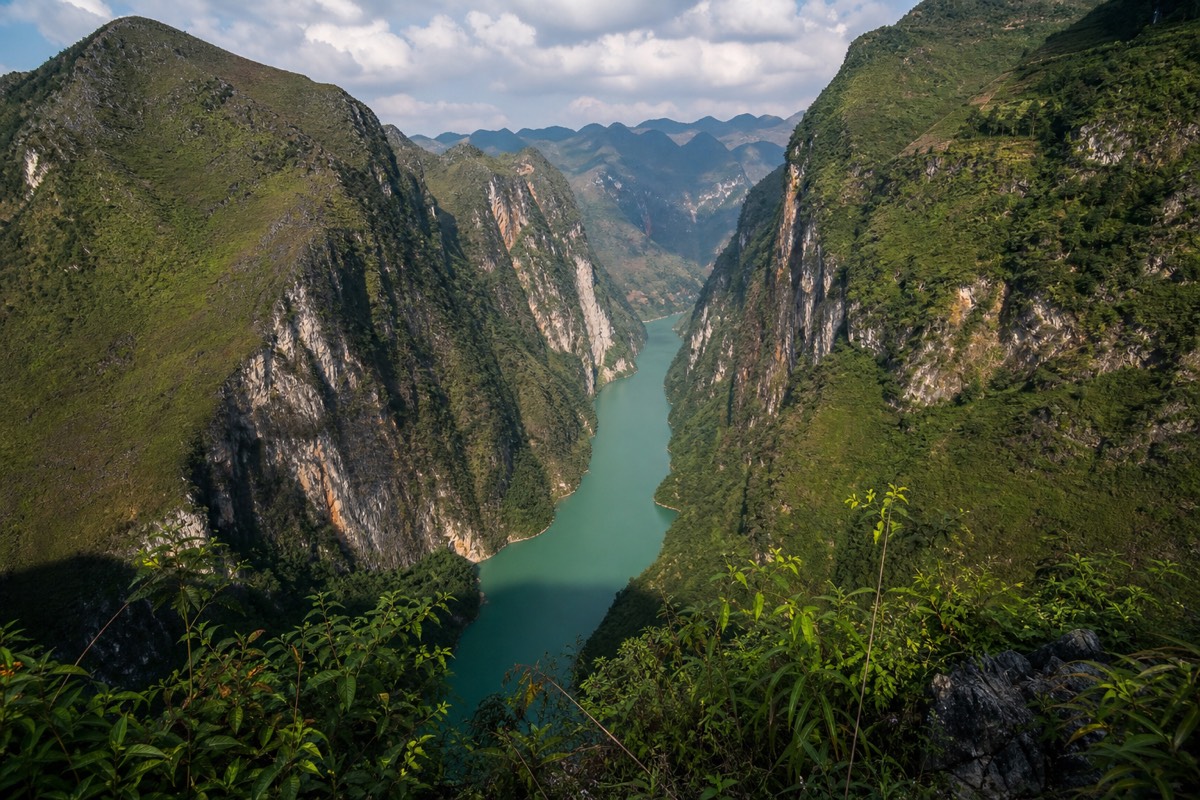
Nho Que River boat tour in Dong Van Karst Plateau Geopark

The Ha Giang Loop requires minimum 3 days for adequate coverage, with 4 days optimal for comfortable pacing and comprehensive experiences, while 2 days proves technically possible but creates exhausting rushed schedule missing majority of scenic opportunities. Most tour operators offer 3-day standard packages at moderate daily distances (80-120km), while 4-day options provide breathing room for photography, cultural stops, weather buffers, and comfortable pace preventing fatigue. The 3-day minimum assumes reasonable fitness and basic motorcycle experience, while 4 days accommodates first-timers, photographers, and anyone prioritizing relaxed enjoyable experience over simply completing circuit.

Standard route follows counterclockwise circuit departing Ha Giang city heading north to Quan Ba’s Heaven’s Gate viewpoint (40km), continuing to Yen Minh plateau town (100km total Day 1 endpoint), proceeding through rocky karst landscapes to Dong Van near Chinese border (190km cumulative Day 2 destination), traversing spectacular Ma Pi Leng Pass to Meo Vac valley town (260km total Day 3 arrival), then returning to Ha Giang city via Du Gia completing 350km full loop. The route divides naturally into segments matching daily riding capabilities with Yen Minh positioned perfect 100km from start, Dong Van additional 90km creating comfortable Day 2 distance, and final Ma Pi Leng section to Meo Vac just 70km allowing extended time at loop’s highlight, though return to Ha Giang from Meo Vac covers longest single-day 120km stretch typically tackled Day 3 of 3-day trips or Day 4 of 4-day itineraries.

Daily riding typically covers 80-120km requiring 4-6 hours actual travel time depending on segment difficulty, stop frequency, and rider experience, with winding mountain passes, steep grades, and narrow roads preventing sustained speeds above 25-35 km/h making distance calculations based on flat highway speeds completely misleading. A typical 100km mountain day includes 3-4 hours riding at 25-30 km/h average speed, 45-60 minutes accumulated photo stops at scenic viewpoints every 10-15km, 30-45 minutes rest breaks for physical recovery and concentration renewal, 15-30 minutes fuel or bathroom stops, and 60-90 minutes lunch creating 5-7 hour total day including all activities. The actual riding proves less exhausting than cumulative hours suggest as frequent stops provide leg stretching, photo opportunities reduce monotony, and varied scenery maintains engagement, though consecutive multi-hour riding days create fatigue accumulation requiring rest days or shorter segments for riders with limited endurance.

Time factors affecting schedule reliability include photo stops where spectacular viewpoints tempt extended sessions easily adding 15-30 minutes per stop across 8-12 daily opportunities, weather delays from morning fog requiring 9-10am starts versus planned 6-7am departures or rain forcing slower speeds and extended breaks, physical fitness determining whether 4-hour riding feels comfortable or exhausting requiring frequent rests, and riding experience influencing speed and confidence on technical sections. First-time mountain riders progress more slowly navigating unfamiliar steep grades and tight curves with conservative speeds adding 20-30% travel time versus experienced riders confidently maintaining pace, while photography enthusiasts spending 20-30 minutes at each viewpoint easily double travel time compared to riders making brief stops for quick photos. The accumulated delays from multiple factors mean optimistic 4-hour riding estimates frequently become 6-7 hour realities, making buffer time essential for realistic schedule planning avoiding arrival after dark or missing planned stops.

Practical recommendation directs first-time visitors toward 4-day itineraries providing comfortable pace and comprehensive coverage, while experienced riders with good fitness can manage 3-day standard achieving adequate highlights. The 2-day option should be avoided by essentially all visitors as brutally long distances and minimal stops create miserable experience, suitable only for extreme time constraints or return visits. When uncertain between durations, choose longer option as extending proves impossible mid-trip while shortening stays flexible if completing route faster than expected.

Duration Total Distance Daily Average Riding Hours Daily Total Riding Stops & Activities Pace Flexibility Best For Avoid If Overall Rating
2 Days 350km 175km 7-8 hours 14-16 hours total Minimal – essentials only, rushed Ma Pi Leng Exhausting None – rigid tight schedule Extreme time constraints, return visitors First-timers, photographers, moderate fitness 3/10 – Not recommended
3 Days 350km 100-120km 4-6 hours 12-18 hours total Major highlights, adequate stops, long Day 3 return Moderate to brisk Limited – tight schedule One-week Vietnam trips, decent fitness, standard coverage Photographers, cultural focus, beginners, low fitness 7/10 – Adequate standard
4 Days 350km 80-100km 4-5 hours 16-20 hours total Comprehensive stops, extended Ma Pi Leng, cultural visits Relaxed comfortable Good – weather buffers, detour options First-timers, photographers, comfortable experience priority Extreme time constraints 9/10 – Optimal recommended
5-6 Days 350-450km 70-90km 3-5 hours 15-25 hours total All stops, detours (Lung Cu, villages), rest days possible Very relaxed Excellent – full flexibility Photographers, cultural immersion, enthusiasts, older riders Tight schedules, limited vacation time 8/10 – Great for enthusiasts
7+ Days 400-600km 60-80km 2-4 hours 14-28 hours total Complete exploration, side valleys, Ba Be Lake extension Leisurely Maximum – total control Professional photographers, researchers, motorcycle enthusiasts Most visitors – diminishing return

Understanding the Route: Ha Giang Loop Geography

3-Day/2-Night Ha Giang Open-Air Jeep Tour off The Beaten Path

Total distance covers approximately 350km counterclockwise circuit departing and returning to Ha Giang city, the capital of Ha Giang province in Vietnam’s remote mountainous north bordering China. The loop follows primarily QL4C highway from Ha Giang through Quan Ba and Yen Minh to Dong Van, then QL4D from Dong Van through Ma Pi Leng Pass to Meo Vac, before returning to Ha Giang via smaller roads through Du Gia and connecting back to main highway. While 350km appears modest on paper suggesting 5-6 hour flat highway drive, the mountain terrain transforms this into 12-20 hours actual riding across multiple days, with elevation changes, winding curves, and technical sections making each kilometer significantly more demanding and time-consuming than equivalent lowland distance.

Major stops divide loop into logical daily segments with Quan Ba at 40km from Ha Giang city featuring Heaven’s Gate viewpoint overlooking twin fairy mountains, Yen Minh at 100km cumulative distance serving as standard Day 1 overnight location on high plateau, Dong Van at 190km total representing Day 2 endpoint near Chinese border with preserved old quarter and Sunday market, and Meo Vac at 260km marking Day 3 destination in deep valley accessed via spectacular Ma Pi Leng Pass. The final 90km return from Meo Vac to Ha Giang completes circuit, with these segment lengths creating natural daily riding divisions matching typical rider capabilities and accommodation distribution. Smaller villages between major towns (Tam Son, Lung Tam, Sung La, Pho Cao) offer additional rest stops, fuel, meals, and occasional accommodation for travelers wanting shorter daily distances or alternative overnight locations beyond main tourist centers.

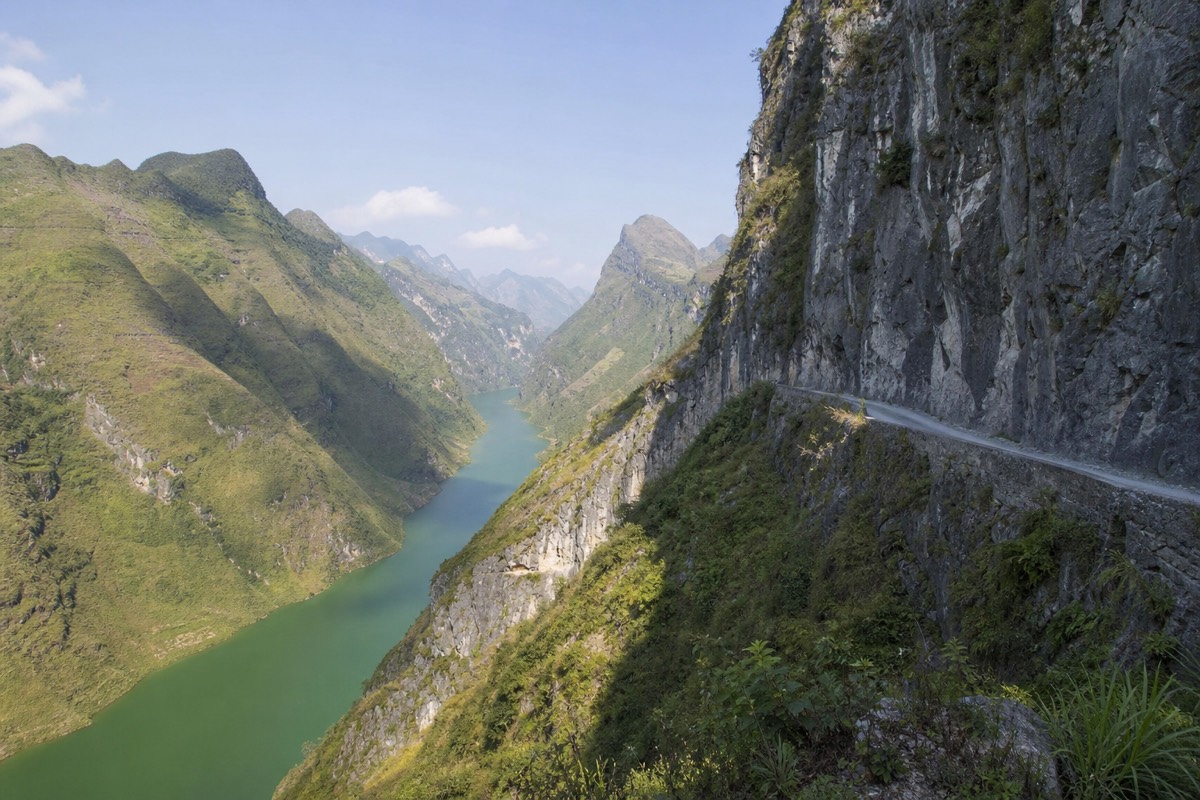
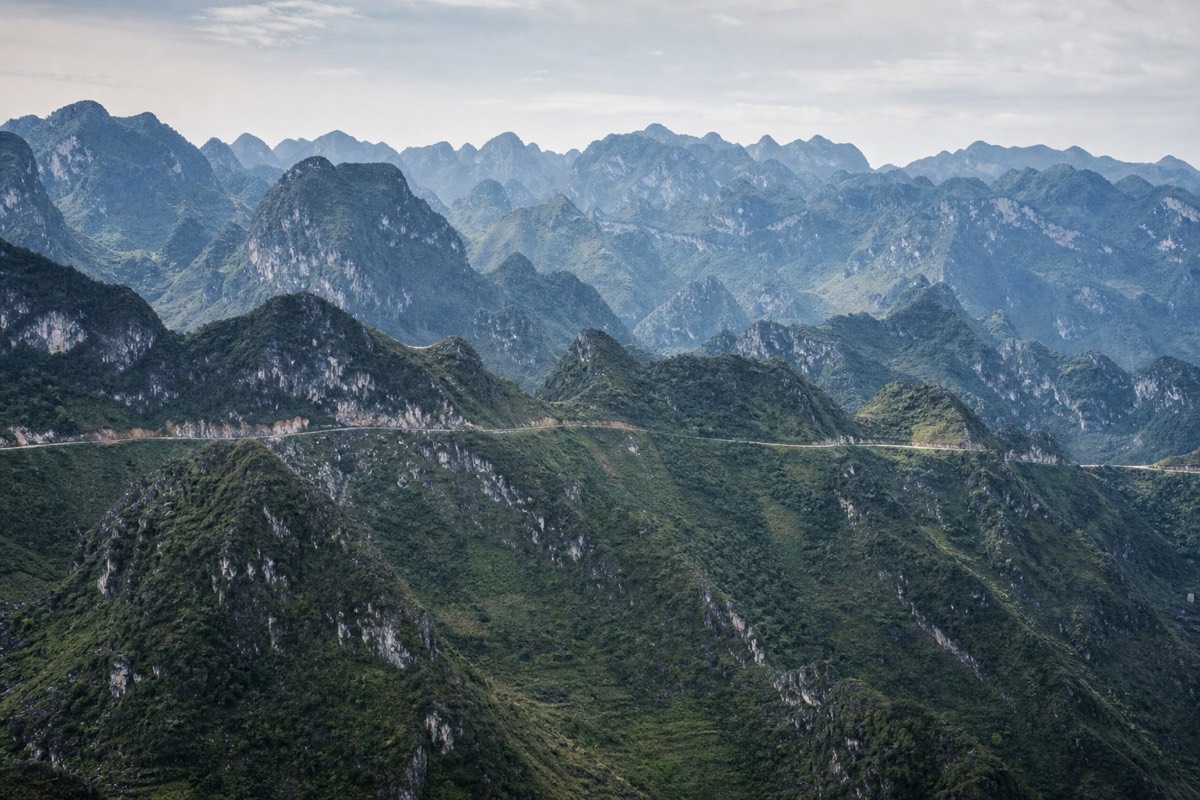
Terrain challenges include multiple mountain passes reaching 1,500-2,000 meters elevation with sustained steep grades testing bike power and rider leg strength, tight switchback curves requiring controlled braking and precise throttle control, narrow sections barely accommodating two-way traffic with sheer drop-offs lacking protective barriers, and rough pavement patches with potholes, loose gravel, or crumbling edges demanding constant attention. The Quan Ba climb from Ha Giang gains 600 meters over 25km with numerous hairpins, while approach to Dong Van navigates rocky karst plateau with exposed riding, and Ma Pi Leng Pass carves along cliff faces with vertigo-inducing views 1,200 meters above Nho Que River creating Ha Giang’s most spectacular and intimidating section. The cumulative climbing and descending across loop totals approximately 4,000-5,000 meters elevation gain/loss, explaining why relatively short daily distances require substantial time and create significant physical demands even for experienced riders.

Key highlights include Heaven’s Gate at Quan Ba (kilometer 40) providing first major photo stop with panoramic views over terraced valleys and distinctive twin mountains, Ma Pi Leng Pass between Dong Van and Meo Vac representing loop’s undisputed centerpiece with cliff-edge road offering spectacular canyon vistas requiring 2-3 hours minimum for photography and optional Nho Que River boat trip, and Dong Van old quarter featuring well-preserved historic buildings, ethnic minority architecture, and Sunday morning market when Hmong and Dao peoples gather for trading creating cultural highlight. Additional notable points include Lung Tam weaving village near Quan Ba demonstrating traditional hemp textile production, Vuong family mansion between Yen Minh and Dong Van showcasing historic Hmong king’s palace, and numerous unnamed viewpoints along plateau and valley sections offering photo opportunities every 5-15km throughout loop.

Alternative routes include northern extension from Dong Van to Lung Cu flag tower (25km each way) marking Vietnam’s northernmost point with Chinese border views and hilltop monument requiring additional 2-3 hours and suitable for 4+ day itineraries, eastern connection to Ba Be Lake National Park (150km from Ha Giang via different route) combining loop with lake scenery and waterfall attractions creating 5-7 day comprehensive northern Vietnam exploration, and various small valley detours off main circuit exploring ethnic minority villages and less-traveled scenic areas. The Hoang Su Phi rice terraces lie southeast of Ha Giang (100km) offering spectacular September-October golden terraced displays accessible as 2-day addition, while Bac Sum Pass provides alternative return route from Meo Vac with different scenery though similar distance, allowing loop variations for return visitors or extended itineraries wanting comprehensive Ha Giang province coverage beyond standard circuit.

If you want to see the full picture before you go, here’s the Ha Giang tours route explained with stops, distances, and what to expect on each section of road.

The 2-Day Rush: Possible But Not Recommended

Dong Van Old Quarter in Ha Giang with historic stone buildings and outdoor cafés.

Day 1: Ha Giang → Dong Van covers brutal 190km requiring 7-8 hours continuous riding with minimal stops, departing Ha Giang city by 6-7am, climbing immediately to Quan Ba Heaven’s Gate (40km, 1.5 hours), continuing through Tam Son to Yen Minh plateau (additional 60km, 2.5 hours), then pushing through rocky karst landscape and Vuong palace to reach Dong Van by 4-5pm (final 90km, 3-4 hours). The marathon day allows brief 10-15 minute photo stops at major viewpoints, 30-45 minute lunch break typically in Yen Minh, and fuel stop in Dong Van, but eliminates leisurely photography, cultural village visits, or extended rest breaks creating relentless riding schedule. Riders arrive Dong Van exhausted with aching legs, sore backs, and depleted concentration after 7-8 hours motorcycle exposure, facing another equally long day tomorrow with insufficient recovery time between demanding segments.

Day 2: Dong Van → Meo Vac → Ha Giang tackles 160km return journey requiring 6-7 hours riding, departing Dong Van early morning for spectacular but time-consuming Ma Pi Leng Pass section to Meo Vac (70km, 3-4 hours including mandatory photo stops at loop’s highlight), then immediately continuing grueling return to Ha Giang via Du Gia (90km, 3-4 hours) without overnight Meo Vac rest. The compressed schedule forces rushing through Ma Pi Leng Pass spending just 45-60 minutes at location deserving 2-3 hours proper appreciation, skipping optional Nho Que River boat trip, and returning Ha Giang by late afternoon or evening exhausted from consecutive demanding days. The long return leg proves particularly draining as Day 2 fatigue compounds Day 1 exhaustion, with final hours requiring mental discipline maintaining concentration and physical stamina operating motorcycle safely despite depleted energy reserves.

Who it works for includes only travelers facing extreme time constraints with just 2 days available between other commitments unable to extend despite knowing limitations, experienced endurance motorcycle riders comfortable with 7-8 hour daily riding from previous multi-day touring experience, and return visitors who’ve previously completed loop at leisurely pace wanting brief revisit focusing on specific highlights without comprehensive coverage. Budget tour operators sometimes market 2-day options appealing to time-poor travelers or those minimizing accommodation costs, though reputable operators discourage this format clearly explaining compromised experience quality versus modest savings achieved through eliminating single overnight stay.

Physical demands create genuinely exhausting 13-15 hour days when including pre-dawn wake-ups, breakfast, bike pickup, 6-8 hours actual riding, stops, meals, and evening bike returns, with sustained motorcycle operation causing leg muscle fatigue from constant clutch and brake operation, back strain from riding position maintained for hours, hand numbness from gripping handlebars and controlling throttle/brakes, and mental concentration depletion navigating technical mountain roads without adequate rest breaks. The consecutive demanding days provide insufficient recovery time between efforts, with Day 2 riders starting already fatigued from Day 1 exertions then facing another 6-7 hour marathon creating cumulative exhaustion affecting safety through reduced reaction times, impaired judgment, and overall compromised riding ability during final challenging return section when alertness matters most.

A Korean rider attempting 2-day loop to maximize limited Vietnam vacation time departed Ha Giang 6am Day 1, reached Dong Van 5pm after relentless riding with minimal stops, then forced 6am Day 2 departure for Ma Pi Leng and return arriving Ha Giang 6pm completely exhausted, sore, and disappointed having rushed through highlights barely remembering experiences beyond physical discomfort and stress. Meanwhile French couple on relaxed 4-day trip departed leisurely 8am, enjoyed extended photography stops, arrived Yen Minh 2pm for afternoon rest, spent evening at homestay conversing with family, and described Day 1 as highlight of entire Vietnam trip through comfortable pacing allowing proper appreciation versus Korean rider’s exhausting blur.

Need help with logistics? Check out our breakdown on how to plan a trip in Ha Giang tours so you don’t miss anything important before you leave.

The 3-Day Standard: Adequate Coverage

H’mong King’s Palace (Vuong Palace) entrance in Ha Giang visited on a cultural tour with Ha Giang Tours

Day 1: Ha Giang → Yen Minh via Quan Ba Heaven’s Gate covers comfortable 100km over 4-5 hours including stops, departing Ha Giang city after breakfast 7-8am, climbing to Quan Ba Heaven’s Gate viewpoint (40km, 1.5 hours) for mandatory 20-30 minute photo stop overlooking twin fairy mountains and terraced valleys, continuing through Tam Son town to Yen Minh plateau arriving early-mid afternoon. The manageable distance allows leisurely pace with multiple photo stops at scenic viewpoints, optional Lung Tam weaving village detour (30 minutes), extended lunch break in Tam Son or roadside restaurants, and arrival Yen Minh with afternoon free for town exploration, rest, or simply relaxing at homestay after first riding day. The opening segment establishes comfortable rhythm without overwhelming first-time mountain riders, builds confidence on technical sections, and provides proper introduction to Ha Giang’s spectacular scenery through varied landscapes from valley floors through mountain passes to high plateau terrain.

Day 2: Yen Minh → Dong Van via plateau and Vuong palace traverses 90km over 4-5 hours across otherworldly rocky karst plateau landscape, departing Yen Minh morning 7-8am, riding through distinctive gray limestone mountains and traditional Hmong stone villages, stopping at Vuong family mansion (historic Hmong king’s palace worth 30-45 minute tour), and arriving Dong Van early-mid afternoon. The moderate distance and relatively gentle terrain make Day 2 less physically demanding than Day 1 or upcoming Day 3, allowing focus on cultural attractions and photography versus pure riding challenge, with Dong Van arrival leaving afternoon for exploring preserved old quarter, visiting weekend market if timing coincides with Sunday, or simply resting before demanding final day. The plateau section delivers Ha Giang’s most distinctive geological scenery with unique karst formations creating alien landscape photographers find endlessly fascinating despite less dramatic elevation changes than pass sections.

Day 3: Dong Van → Meo Vac via Ma Pi Leng Pass → return Ha Giang tackles longest 160km day requiring 6-7 hours riding, departing Dong Van early 6-7am for spectacular Ma Pi Leng Pass section (70km to Meo Vac, 3-4 hours with photo stops), spending 1-2 hours at pass viewpoints and optional Nho Que River boat trip, then immediately continuing return journey to Ha Giang via Du Gia (90km, 3-4 hours) arriving late afternoon or early evening. The compressed final day forces balancing adequate Ma Pi Leng appreciation against completing long return before dark, typically allowing 60-90 minutes at pass versus 2-3 hours ideal for comprehensive photography and relaxation, with return section becoming increasingly tiring as day progresses and cumulative three-day fatigue accumulates. The challenge lies in maintaining concentration and safe riding during final 2-3 hours when exhaustion peaks, requiring discipline pacing appropriately rather than rushing dangerously to complete loop before sunset deadline.

Coverage achieved through 3-day standard includes all major Ha Giang Loop highlights with Heaven’s Gate viewpoint, karst plateau landscapes, Vuong palace cultural stop, Dong Van old quarter exploration, and Ma Pi Leng Pass spectacular scenery, plus adequate photography opportunities at primary viewpoints though with time pressures limiting extended sessions or comprehensive coverage of secondary locations. The itinerary captures essential loop experiences allowing visitors claiming legitimate completion and seeing primary attractions, though missing leisurely cultural village interactions, extended sunrise/sunset photography sessions, flexibility for weather delays or mechanical issues, and overall relaxed pace creating deeper connection versus efficient highlight collection. Most first-time 3-day visitors report satisfaction having seen spectacular scenery and completed challenging ride, though some express wishes for additional day allowing less rushed Ma Pi Leng experience and elimination of stressful long Day 3 return.

Best for travelers allocating one week total to northern Vietnam including travel days to/from Hanoi (2 days transport, 3 days loop, 2 days buffer/Victoria Falls equivalent nearby attractions), riders with standard physical fitness handling 4-6 hour daily riding without excessive fatigue, and motorcyclists with moderate mountain experience comfortable navigating technical sections at reasonable pace without extensive breaks. The 3-day format works adequately for budget-conscious travelers minimizing accommodation nights, organized tour participants following set itineraries most operators offer, and visitors prioritizing loop completion and major highlights over comprehensive cultural immersion or extensive photography requiring additional time. First-time Ha Giang visitors with flexible schedules should strongly consider 4-day upgrade for modest additional cost dramatically improving experience quality, though 3 days remains viable adequate option when time or budget constraints prevent extension despite recognized limitations.

We’ve mapped out 3-Day vs 4-Day vs 5-Day in Ha Giang tours so you can match your itinerary to your riding pace without feeling rushed or killing time.

The 4-Day Optimal: Recommended Duration

Rocky limestone mountains and valleys of Dong Van Karst Plateau Geopark seen on a Ha Giang Tours experience

Day 1: Ha Giang → Yen Minh via Quan Ba covers 100km at genuinely leisurely 5-6 hour pace including extended stops, departing Ha Giang city relaxed 8-9am after proper breakfast, spending 30-45 minutes at Heaven’s Gate viewpoint for comprehensive photography from multiple angles, taking optional Lung Tam weaving village detour (30 minutes observing traditional hemp textile production), enjoying unhurried 60-90 minute lunch in Tam Son, and arriving Yen Minh mid-afternoon with several hours free for town exploration, sunset photography, or simply resting. The extra time versus 3-day schedule eliminates any rushing or time pressure, allows stopping at every interesting viewpoint without guilt about delays, and creates proper gentle introduction to mountain riding building confidence before subsequent more challenging days.

Day 2: Yen Minh → Dong Van via rocky plateau maintains comfortable 90km over 4-5 hours with abundant exploration opportunities, departing leisurely after homestay breakfast and family conversations, stopping frequently across karst plateau for photography of unique limestone formations, spending full 45 minutes at Vuong family mansion learning Hmong history through guided tour, and arriving Dong Van early afternoon allowing extended old quarter exploration or rest before dinner. The moderate Day 2 distance and terrain provide recovery time from Day 1 efforts while preparing physically and mentally for upcoming demanding Ma Pi Leng Pass section, with afternoon Dong Van arrival enabling Sunday market timing coordination for travelers planning weekend visits or simply providing buffer time for unexpected discoveries and spontaneous detours.

Day 3: Dong Van → Meo Vac via Ma Pi Leng Pass dedicates full day to just 70km allowing 2-3 hours extended time at loop’s absolute highlight, departing Dong Van morning 7-8am, reaching Ma Pi Leng Pass mid-morning for optimal photography light, spending comprehensive 90-120 minutes at multiple viewpoints capturing cliff-edge road and canyon vistas from varied angles, taking optional Nho Que River boat trip (1 hour) viewing pass from below, and arriving Meo Vac early-mid afternoon for valley exploration and rest. The single-segment day represents 4-day itinerary’s key advantage over 3-day compression, transforming Ma Pi Leng from rushed 60-minute stop into properly appreciated full morning experience justifying Ha Giang Loop’s international reputation, with Meo Vac overnight allowing evening sunset viewing over valley and morning fresh start for return journey versus 3-day’s exhausting immediate continuation.

Day 4: Meo Vac → Ha Giang via Du Gia return route completes 120km return over 5-6 hours, departing Meo Vac morning after rest, retracing Ma Pi Leng Pass briefly enjoying different lighting and perspectives versus previous day’s approach, branching south through less-traveled Du Gia route encountering fewer tourists and alternative valley scenery, and arriving Ha Giang afternoon with satisfaction from completing full circuit at comfortable sustainable pace. The dedicated return day eliminates 3-day’s stressful Day 3 marathon combining Ma Pi Leng with long return, allowing proper appreciation of return route scenery often missed during exhausted 3-day rush, and providing psychological completion through proper circuit ending versus collapsing exhausted at finish line.

Flexibility benefits from 4-day schedule include ability adding optional Lung Cu flag tower detour (25km each way from Dong Van, Vietnam’s northernmost point) as Day 2 or Day 3 extension without disrupting overall timing, coordinating Sunday Dong Van market visits through flexible Day 2 arrival timing, absorbing weather delays from morning fog or afternoon rain without derailing entire trip, allowing rest days if physical fatigue exceeds expectations, and generally adapting to circumstances versus rigid 3-day schedule leaving no slack for adjustments. The buffer day transforms Ha Giang Loop from scheduled tour into genuine exploration where discoveries and spontaneous decisions enhance rather than disrupt experience, with travelers reporting lower stress, higher satisfaction, and more memorable moments from relaxed pacing allowing appreciation versus 3-day’s efficiency-focused completion mentality.

Practical recommendation establishes 4 days as ideal duration for first-time Ha Giang Loop visitors balancing comprehensive coverage with comfortable pacing and reasonable time commitment. The additional day versus 3-day standard costs just $30-50 extra (one night accommodation plus meals) while dramatically improving experience quality through eliminated rushing, proper Ma Pi Leng appreciation, weather flexibility, and sustainable physical demands preventing exhaustion. When choosing between 3 and 4 days, select 4 days unless genuine time constraints prevent extension, as modest additional investment delivers disproportionate experience improvement making Ha Giang Loop genuinely memorable versus adequately completed.

The 5+ Day Extended: For Photographers and Enthusiasts

Extended itinerary builds on standard 4-day loop adding rest days, side valley explorations, multiple nights at favorite locations, and overall luxurious pacing eliminating any time pressure, with typical 5-6 day trips including extra Dong Van or Meo Vac night for sunrise/sunset photography sessions, 7-day journeys incorporating major detours like Ba Be Lake or Hoang Su Phi terraces, and truly extended 8-10 day explorations combining Ha Giang Loop with comprehensive northern Vietnam mountain region coverage. The additional days transform loop from destination to genuine journey where daily distances shrink to comfortable 50-80km allowing extended cultural interactions, thorough photography of locations under varied lighting, and absorption of mountain atmosphere impossible during standard itineraries focused on completing circuit versus deeply experiencing specific places.

Additional options accessible with extended time include Lung Cu flag tower detour (25km each way from Dong Van) marking Vietnam’s northernmost point with hilltop monument and Chinese border views requiring 2-3 hours, Ba Be Lake National Park (150km southeast of Ha Giang via different route) combining loop with tranquil lake scenery, waterfalls, and cave explorations adding 2-3 days, and Hoang Su Phi rice terraces (100km east of Ha Giang) offering spectacular September-October golden terraced displays rivaling more famous Sapa regions with minimal tourist presence. The extensions create comprehensive northern Vietnam mountain experiences beyond Ha Giang Loop’s specific circuit, though each adds 1-3 days and 100-200km additional riding requiring genuine multi-week regional exploration versus standard loop’s focused 350km circuit.

Photography benefits from extended duration include multiple sunrise/sunset sessions at Ma Pi Leng Pass capturing varied lighting conditions across different days, patience waiting for optimal weather after storms pass or fog clears versus single-chance attempts during standard schedules, dawn and dusk village photography capturing daily life rhythms through repeated visits building local rapport, and overall comprehensive location coverage shooting primary subjects from multiple angles under different conditions creating professional portfolio-quality image collections. The time investment allows anticipating and capturing specific moments like market arrivals, traditional ceremonies, agricultural activities, or wildlife encounters requiring presence and patience impossible during rushed 3-4 day transits focused on covering distance rather than deeply documenting locations.

Cultural immersion through extended village homestay stays spanning multiple nights at same location builds genuine relationships with host families, participation in daily activities like cooking traditional meals or agricultural work, attendance at local events and ceremonies, conversations with village elders learning ethnic minority history and customs, and overall authentic cultural exchange versus tourist briefings during single-night standard stops. The repeated presence transforms travelers from passing visitors into temporary community members granted access to experiences unavailable during brief stays, with extended time allowing language barriers gradually breaking down through repeated interactions, trust building enabling deeper conversations, and overall cultural understanding impossible achieving through surface-level tourist encounters at standard itinerary’s pace.

Who benefits from extended durations includes professional photographers requiring comprehensive image collections and optimal lighting patience, cultural researchers and anthropologists conducting ethnographic studies needing extended community access, retired travelers without time constraints prioritizing quality depth over efficient highlight collection, and motorcycle enthusiasts loving mountain riding for its own sake rather than destination focus treating extended loop as genuine motorcycle touring adventure. The 5+ day format proves unnecessary and potentially boring for typical tourists wanting efficient highlight coverage, with diminishing returns setting in after 5-6 days for most visitors lacking specific photography or cultural research objectives justifying extended presence, making extended duration specialist choice rather than general recommendation.

Weather and Seasonal Duration Considerations

Dry season (October-April) provides predictable stable weather allowing confident 3-4 day planning without buffer days for delays, with minimal rainfall eliminating landslide concerns, clear visibility maintaining schedules, and reliable road conditions permitting efficient daily distance coverage. The weather predictability means 3-day itineraries work consistently achieving planned coverage, 4-day schedules feel genuinely relaxed with abundant slack time, and tight 2-day options become technically feasible though still not recommended despite reduced weather risks. Standard itineraries designed for dry season assume morning departures proceed on schedule, daily distances achieve without delays, and overall timing follows plans versus rainy season unpredictability requiring constant adjustments.

Rainy season (June-August) necessitates adding buffer day transforming 3-day into 4-day minimum and 4-day into 5-day safer options, accommodating landslide delays potentially blocking roads for hours requiring detours or waiting for clearing, heavy rain forcing slower speeds and extended breaks doubling travel times, and overall schedule unpredictability making tight timing impossible. The weather-related delays prove genuinely random with some rainy season trips completing without significant disruptions while others face 3-4 hour landslide delays or full-day rain preventing departure creating day-long homestay confinement, making extra buffer days insurance against catastrophic schedule failures versus luxury for standard conditions. Travelers visiting summer months despite recommendations should automatically add minimum one extra day versus dry season equivalents, accepting possible unused slack time as preferable to missed return flights from underestimated delays.

October peak crowding adds 20-40 minutes daily to standard schedules through dozens of motorcycles at popular Ma Pi Leng Pass viewpoints creating queues for photo positions, congested narrow road sections forcing slow following of cautious riders, and overall traffic delays absent during uncrowded periods, with particularly significant impact at Ma Pi Leng where 60-90 minute solo visit becomes 90-120 minutes when coordinating among multiple groups. The crowd delays remain modest compared to weather impacts but accumulate across multiple daily viewpoint stops, potentially adding 30-60 minutes to daily schedules and creating occasional frustrations waiting for clear photo angles or navigating around slow-moving groups blocking narrow sections. October visitors should plan slightly longer daily timeframes or reduce daily distance expectations accepting crowd-related pace reductions as inevitable peak season reality.

Winter (December-February) morning fog delaying starts until 9-10am when visibility improves eliminates early departures reducing available daily riding hours from standard 10-12 hours (6am-6pm) to constrained 8-9 hours (10am-6pm), requiring either shortened daily distances, extended riding into afternoon reducing photo stop time, or additional days maintaining comprehensive coverage within reduced daily windows. The fog impact proves particularly problematic for photography-focused trips as dawn golden hour becomes inaccessible and compressed daily schedules force choosing between adequate riding distance and proper sunset photography sessions. Winter visitors should automatically plan 4-5 day minimum versus 3-4 day dry season standard, accepting morning delays as unavoidable and building schedules around 9-10am starts rather than optimistic 6-7am departures impossible during persistent fog.

Spring/autumn optimal seasons (March-May, September-November) deliver reliable weather and timing making 3-4 day standard schedules work consistently with high success rates, minimal weather disruptions, and overall predictable experiences matching planned itineraries. The stable conditions mean duration decisions focus purely on coverage and pace preferences rather than weather contingencies, with 3 days adequate for efficient highlight coverage, 4 days comfortable for relaxed experiences, and 5+ days extending into luxury or specialist territory without weather justification. Most visitors traveling optimal seasons should choose desired duration based on personal priorities without adding weather buffers, as excellent conditions throughout periods make standard itineraries reliable without extra insurance days.

Practical recommendation adds extra day beyond intended minimum if visiting rainy season (4-5 days instead of 3-4) or winter fog season (4-5 days instead of 3-4), treating additional day as insurance against weather delays rather than planned coverage with understanding it may prove unnecessary but preventing catastrophic schedule failures. Optimal season visitors can plan exactly desired duration without weather buffers, confidently booking 3-day standard or 4-day comfortable schedules knowing conditions support reliable timing, while off-season travelers should automatically budget extra day recognizing challenging conditions require flexibility impossible within minimum viable durations.

The season you pick can completely change your experience. This breakdown of the best time to visit Ha Giang tours shows you exactly what to expect throughout the year.

Physical Fitness and Riding Experience Impact

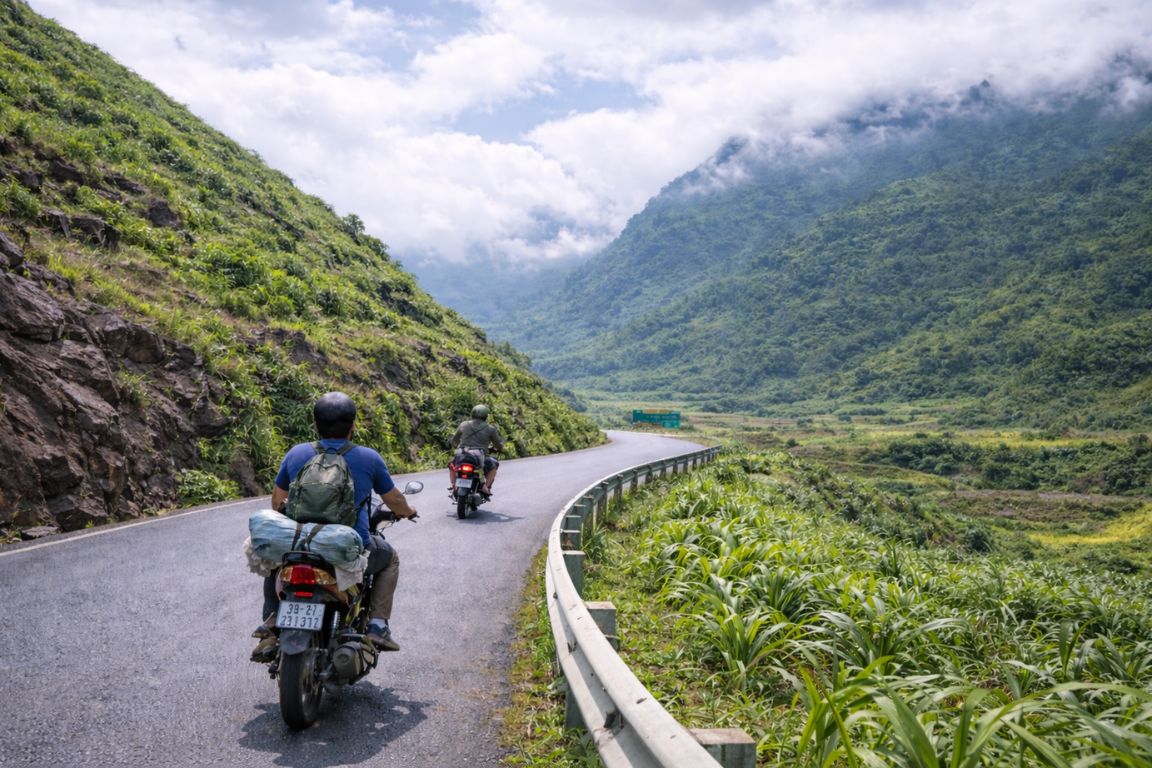
Scenic Ha Giang mountain road ride captured during a multi-day motorbike tour with Ha Giang Tours in northern Vietnam.

Beginner riders with limited motorcycle experience or first-time mountain riding need 4-5 days minimum accommodating slower speeds from unfamiliarity with steep grades and tight curves, more frequent rest breaks recovering from concentration strain, and overall learning curve gradually building confidence. The extra days allow beginner-friendly 60-80km daily distances versus experienced rider 100-120km segments, provide psychological safety buffers reducing pressure from tight schedules, and create gentler progression from introductory Day 1 through challenging Ma Pi Leng Day 3 without overwhelming novices. First-time mountain riders should never attempt 2-day options and strongly prefer 4-day minimum over 3-day compression, as physical and mental demands compound across days making inadequate initial preparation increasingly problematic.

Experienced riders with substantial mountain motorcycling backgrounds, confidence navigating technical sections at reasonable speeds, and physical conditioning from regular riding can manage 3-day standard achieving adequate coverage without excessive strain. The experienced rider advantages include maintaining 30-35 km/h average speeds versus beginner 20-25 km/h, requiring shorter recovery breaks between segments, handling challenging sections efficiently without extended cautious approaches, and overall higher daily distance capacity making standard 100-120km segments feel comfortable rather than exhausting. Experienced riders still benefit from 4-day option’s relaxed pacing and photography time but don’t require additional days for physical or skill reasons, making duration choice purely about coverage depth versus capability limitations.

If you’re serious about making it back in one piece, here’s our breakdown of motorbike safety in Ha Giang tours based on what actually causes problems on the loop.

Fitness levels significantly impact sustainable daily riding distances with good fitness from regular exercise enabling 3-day completion without excessive fatigue, moderate fitness from occasional activity requiring 4-day schedule preventing exhaustion accumulation, and low fitness from sedentary lifestyles demanding 5-day minimum spreading effort across manageable segments. The motorcycle riding proves deceptively demanding physically through sustained leg muscle engagement operating clutch and brakes, core strength maintaining riding position for hours, arm and shoulder strain from handlebar control, and overall endurance requirements during consecutive multi-hour days. Honest fitness self-assessment prevents mid-trip struggles, with visitors overestimating capabilities discovering Day 2 or Day 3 that inadequate fitness makes continuing miserable, while those choosing conservative longer durations matching actual abilities enjoy comfortable sustainable experiences.

Age considerations show younger riders in 20s-30s typically managing 3-day standard through natural stamina and recovery advantages, middle-aged 40s-50s visitors preferring 4-day schedules allowing adequate rest between efforts, and senior 60+ travelers usually requiring 5-day minimum reducing daily demands to sustainable levels accounting for slower recovery. The age patterns prove generalizations with fit older riders outperforming sedentary younger visitors, though statistical trends show clear correlation between age and preferred duration across thousands of Ha Giang Loop participants. Older travelers should resist pressure matching younger participants’ aggressive schedules, instead choosing durations honestly reflecting personal capabilities ensuring enjoyable sustainable experiences versus struggling through inappropriately demanding itineraries.

Tour versus DIY formats show organized tours typically offering fixed 3-4 day schedules accommodating group averages but unable adjusting for individual variations, requiring participants matching tour pace regardless of personal preferences or capabilities. DIY independent riders enjoy complete flexibility adjusting daily distances based on personal energy and conditions, extending stays at favorite locations or shortening segments if fatigue exceeds expectations, and overall customizing duration to exact personal circumstances. The tour format works adequately for travelers near average fitness and experience falling within tour’s target demographic, while significantly above-average or below-average capabilities make DIY’s flexibility increasingly valuable allowing proper personal pace.

We’ve broken down guided Ha Giang tours vs self-ride so you know exactly what you’re signing up for with either option before you commit.

Motorcycle type influences duration requirements with semi-automatic bikes (Honda Wave, Yamaha Sirius) proving easier to operate eliminating clutch coordination but delivering slower hill climbing and overall speeds adding 10-20% travel time versus manual transmission bikes. Manual motorcycles (Honda XR, Yamaha Exciter) demand more riding skill and physical effort through constant clutch and gear shifting but provide superior power and control enabling faster confident riding reducing daily timeframes. The bike choice interacts with experience levels where novice riders on semi-automatics need maximum time allowances (4-5 days), experienced riders on manuals achieve fastest coverage (3 days adequate), with intermediate combinations falling between extremes.

Budget Implications of Different Durations

3-Day/2-Night Private Car Tour: English-Speaking Driver + Private Rooms

2-day costs total just $60-100 budget travelers eliminating single accommodation night appearing significantly cheaper than 3-4 day alternatives, though creating poor value per experience through brutal schedule, missed highlights, and overall disappointing quality making modest savings false economy. The $60-100 budget 2-day includes bike rental $10-15, single night accommodation $5-15, meals $12-20, fuel $15-20, permits $10-20, creating superficially attractive low absolute cost obscuring terrible value proposition. Most 2-day participants report regretting duration choice wishing they’d spent extra $30-50 for additional day transforming rushed suffering into enjoyable adventure, with financial savings undermined by disappointment and physical misery.

3-day costs range $90-150 for budget travelers using homestays and local restaurants, or $180-300 for mid-range visitors preferring guesthouses and better dining, representing standard value baseline against which other durations compare. The 3-day budget breakdown includes bike rental $15-30, accommodation $15-45 (2 nights), meals $30-45 (9 meals), fuel $15-20, permits $10-20, delivering adequate coverage at reasonable total investment suitable for most travelers. Mid-range 3-day at $180-300 upgrades accommodation to $20-40 guesthouses, meals to $5-10 restaurants, and potentially premium bike rental creating comfortable experience without luxury pricing, representing sweet spot for visitors wanting quality without excessive spending.

4-day costs total $120-200 budget or $240-400 mid-range adding just single day’s expenses ($30-50 budget, $60-100 mid-range) versus 3-day baseline while dramatically improving experience quality creating best per-day value across all duration options. The incremental cost proves modest—one additional night accommodation, three extra meals, negligible additional fuel—making 4-day option accessible even for budget-conscious travelers. The value proposition shows 4-day delivering approximately 85-90% coverage and satisfaction of 5+ day luxury durations at 60-70% total cost, while providing 25-35% better experience than 3-day at just 25-33% price premium creating optimal balance.

5+ day costs reach $150-250+ budget or $300-500+ mid-range with extended durations showing diminishing returns for general tourists as additional days beyond 4-5 add expenses without proportional experience improvements unless pursuing specific photography or cultural objectives. The 5-day budget of $150-200 includes bike rental $25-40, accommodation $25-60 (4 nights), meals $50-75, fuel $15-25, permits $10-20, creating meaningful total expense where each additional day costs full $30-40 without dramatic quality improvements. Extended durations prove worthwhile investments for photographers, enthusiasts, and cultural researchers gaining genuine value from extra time, but represent poor value for typical tourists better served investing in 4-day quality experience.

Fixed versus variable costs structure shows bike rental and permits representing fixed expenses regardless of duration (permits $10-30 total, bike rental scales linearly at $5-10 daily), while variable costs of accommodation and meals comprise majority of duration-related expense differences. Adding fourth day to 3-day trip costs literally just one night accommodation ($5-40 depending on tier) plus three meals ($6-30 depending on dining choices) totaling $11-70 incremental expense, making extension decision primarily about whether modest additional investment justifies significantly improved pacing. The cost structure favors longer durations from value perspective as fixed setup costs get spread across more experiences and highlights, reducing per-activity costs as duration extends.

Cost per highlight ratio analysis shows 4-day optimal duration visiting approximately 12-15 major stops at total cost of $120-200 budget ($8-17 per highlight) or $240-400 mid-range ($16-33 per highlight), compared to 3-day covering 8-10 highlights at $90-150 budget ($9-19 per highlight) or $180-300 mid-range ($18-38 per highlight). The 4-day delivers better per-highlight value through adding several stops at marginal cost increase, while also providing better per-day value at $30-50 daily budget or $60-100 daily mid-range matching 3-day rates but with superior pace. The 2-day shows worst value at $30-50 budget per highlight covered, while 5+ day extends into diminishing returns territory, making 4-day mathematical and experiential sweet spot.

Duration Budget Total Mid-Range Total Daily Cost (Budget) Daily Cost (Mid-Range) Highlights Covered Cost Per Highlight (Budget) Cost Per Highlight (Mid-Range) Value Rating Best For
2 Days $60-100 $150-200 $30-50 $75-100 5-7 (rushed) $9-20 $21-40 Poor 3/10 Extreme time constraints only
3 Days $90-150 $180-300 $30-50 $60-100 8-10 (adequate) $9-19 $18-38 Good 7/10 Standard adequate coverage
4 Days $120-200 $240-400 $30-50 $60-100 12-15 (comprehensive) $8-17 $16-33 Excellent 9/10 Best value and experience
5 Days $150-200 $300-400 $30-40 $60-80 15-18 (thorough) $8-13 $17-27 Very Good 8/10 Photographers, enthusiasts
6-7 Days $180-250+ $360-500+ $30-40 $60-80 18-22+ (complete) $8-14 $16-27 Good 7/10 Specialists, diminishing returns

FAQ: Ha Giang Loop Duration

1. How many days do you need for Ha Giang Loop?

Minimum 3 days for adequate coverage, 4 days optimal for most visitors. Three days covers all major highlights at moderate pace with long Day 3 return (160km). Four days provides relaxed comfortable schedule, dedicated Ma Pi Leng Pass day, and better overall experience. Two days technically possible but extremely rushed and not recommended. Five+ days suits photographers and cultural enthusiasts wanting extended exploration.

2. Can you do Ha Giang Loop in 2 days?

Technically yes, practically no. Two days requires brutal 175km average daily distances, 7-8 hours riding each day, minimal stops, and exhausting pace missing most scenic and cultural opportunities. Day 1 covers 190km Ha Giang to Dong Van (7-8 hours), Day 2 tackles 160km Dong Van to Meo Vac via Ma Pi Leng then return Ha Giang (6-7 hours). Suitable only for extreme time constraints or experienced endurance riders, with most 2-day participants regretting choice.

3. What’s the difference between 3-day and 4-day Ha Giang Loop?

Four-day splits final long day allowing dedicated Ma Pi Leng Pass appreciation (full Day 3) and separate comfortable return (Day 4), versus 3-day combining both into exhausting 160km final day. Four-day provides weather buffers, optional detours (Lung Cu flag tower), extended photography time, and overall relaxed pace. Cost difference just $30-50 budget or $60-100 mid-range for extra accommodation/meals, delivering dramatically improved experience quality for modest investment.

4. How long does it take to ride from Ha Giang to Dong Van?

Approximately 7-8 hours including stops for 190km distance. Riding time alone 5-6 hours at mountain speeds 25-35 km/h, plus 1-2 hours accumulated photo stops, lunch break, rest breaks. Split across two days on standard itinerary: Day 1 Ha Giang to Yen Minh (100km, 4-5 hours), Day 2 Yen Minh to Dong Van (90km, 4-5 hours). Direct single-day possible but exhausting, recommended only on 2-day rush schedules.

5. Is 3 days enough for Ha Giang Loop?

Yes, adequate but tight. Three days covers all major highlights with reasonable daily distances (80-120km) and adequate photo opportunities at primary viewpoints. Limitations include long 160km final day combining Ma Pi Leng Pass with return Ha Giang, limited flexibility for weather delays or detours, and rushed Ma Pi Leng experience (60-90 minutes versus ideal 2-3 hours). Works well for one-week northern Vietnam trips, standard fitness, moderate experience. Four days recommended if schedule allows.

6. How far do you ride each day on Ha Giang Loop?

Typically 80-120km daily on 3-4 day itineraries. Day 1: Ha Giang to Yen Minh 100km (4-5 hours). Day 2: Yen Minh to Dong Van 90km (4-5 hours). Day 3: Dong Van to Meo Vac 70km (3-4 hours) on 4-day, or Dong Van to Meo Vac to Ha Giang 160km (6-7 hours) on 3-day. Day 4 (if 4-day): Meo Vac to Ha Giang 120km (5-6 hours). Mountain terrain means 100km requires 4-5 hours versus 2 hours on flat highways.

7. Should beginners do 3-day or 4-day Ha Giang Loop?

Four-day strongly recommended for beginners. First-time mountain riders need slower speeds, more frequent breaks, learning curve building confidence, and buffer time for mistakes or unfamiliarity with technical sections. Four days provides beginner-friendly 60-90km daily distances, psychological safety from less time pressure, and gentler progression without overwhelming novices. Three-day works only for beginners with good fitness and some motorcycle experience, while complete novices should consider 5-day or organized tour with guide support.

8. Can you do Ha Giang Loop in 5 days?

Absolutely, ideal for photographers, cultural enthusiasts, older riders, and anyone wanting very relaxed pace. Five days allows 60-80km comfortable daily distances, multiple nights at favorite locations, extended cultural village interactions, comprehensive photography sessions, rest days if needed, and optional detours (Lung Cu flag tower, side valleys). Costs $150-200 budget or $300-400 mid-range total. Represents luxury duration for general tourists with diminishing returns beyond 5 days unless pursuing specific photography or research objectives.


Glossary: Ha Giang Loop Duration Terms

Standard Loop (3-4 days): Most common Ha Giang Loop duration covering 350km circuit with adequate to comfortable pacing. Three days represents minimum adequate duration with tight schedule, four days optimal for most visitors providing relaxed pace and comprehensive coverage. Represents mainstream tourist choice balancing time commitment and experience quality.

Extended Loop (5+ days): Longer Ha Giang Loop durations exceeding standard 3-4 days, incorporating rest days, side valley explorations, multiple nights at single locations, or major detours. Suits photographers needing varied lighting conditions, cultural researchers wanting extended village stays, and motorcycle enthusiasts treating loop as leisurely touring adventure rather than destination completion.

Daily Riding Distance: Typical kilometers covered per day on Ha Giang Loop, ranging 80-120km on standard 3-4 day itineraries. Varies by duration (2-day averages 175km daily, 5-day averages 70km daily), rider experience, fitness level, and stop frequency. Mountain terrain makes these distances require 4-6 hours versus 1.5-2.5 hours on flat highways.

Mountain Kilometer vs Flat Kilometer: Distinction recognizing mountain road distances take 2-3 times longer than equivalent flat highway distances due to slow speeds (25-35 km/h), frequent stops for photos and rest, winding curves preventing sustained speeds, and steep grades reducing average pace. Critical understanding for realistic duration planning as 100km mountain segment requires 4-5 hours versus 1.5-2 hours on flat roads.

Buffer Day: Extra day added to minimum required duration providing flexibility for weather delays (fog, rain, landslides), mechanical issues, lower-than-expected personal pace, or spontaneous detours. Particularly important rainy season and winter when conditions unpredictable. Transforms into rest day or extended stay if delays don’t materialize, preventing trip failures from underestimated time requirements.

Rest Day: Dedicated zero-riding day during extended 5+ day itineraries allowing physical recovery, extended village cultural immersion, photography waiting for optimal conditions, or simply relaxing at favorite location. Breaks up consecutive riding days preventing fatigue accumulation, particularly valuable for older riders, low fitness visitors, or those combining Ha Giang Loop with other demanding Vietnam activities.

Lung Cu Extension: Optional 50km round-trip detour from Dong Van to Lung Cu flag tower marking Vietnam’s northernmost point with hilltop monument and Chinese border views. Requires 2-3 hours including riding and flag tower visit, typically added Day 2 or Day 3 on 4+ day itineraries. Represents most common short extension from standard loop, accessible to all fitness levels unlike more demanding side valley explorations.

Ba Be Connection: Major 150km extension combining Ha Giang Loop with Ba Be Lake National Park featuring tranquil lake scenery, waterfalls, and cave explorations. Requires additional 2-3 days creating 5-7 day total itinerary. Accessed via different route southeast from Ha Giang versus standard loop’s northern circuit, representing significant commitment suitable for comprehensive northern Vietnam mountain region exploration rather than focused Ha Giang Loop experience.


Ready to Choose Your Ha Giang Loop Duration?

Ha Giang Loop duration fundamentally shapes entire experience with 4 days representing optimal choice for most visitors through comprehensive coverage at comfortable pace, 3 days adequate for time-constrained travelers accepting tight schedules and long final day, 2 days categorically avoided except extreme circumstances creating miserable rushed experiences, and 5+ days serving photographers and enthusiasts wanting extended exploration beyond mainstream tourist priorities. The duration decision proves more critical than many travelers realize, with inadequate time allocation creating disappointing struggles versus proper scheduling enabling memorable adventures, as physical demands, weather unpredictability, and mountain terrain realities make Ha Giang Loop more challenging than flat highway’s 350km distance suggests.

More days consistently deliver better experiences through eliminated rushing, proper highlight appreciation, cultural interaction time, and weather flexibility, though diminishing returns begin after 5 days for general tourists lacking specific photography or research objectives justifying extended presence. The modest cost differences between durations—just $30-50 budget or $60-100 mid-range per additional day—make duration decisions primarily about time availability and personal pace preferences rather than budget constraints for most visitors, with 4-day upgrade from 3-day standard proving particularly worthwhile investment delivering disproportionate experience improvements for minimal additional expense.

Contact us to discuss your personal circumstances including riding experience, physical fitness, photography interests, time constraints, and pace preferences helping determine ideal Ha Giang Loop duration matching specific situation rather than generic recommendations. Our guides provide honest assessments whether aggressive timelines suit capabilities, conservative longer durations prove unnecessarily cautious, or standard options match perfectly, ensuring realistic expectations and optimal scheduling for successful memorable trips.

Explore duration-specific tour options and get personalized planning advice at hagiang.tours where we offer flexible 3-7 day itineraries accommodating varied schedules and preferences, understand exactly how different durations affect experiences through years of guiding every timeframe, and provide honest guidance whether your planned duration suits goals or adjustments improve outcomes.

The loop covers 350 kilometers through spectacular mountains. The question is how many days you need properly experiencing versus simply completing the circuit.

From the guides at Ha Giang Tours who’ve led rushed 2-day marathons watching exhausted riders struggle through highlights, guided standard 3-day trips balancing adequate coverage with tight schedules, enjoyed relaxed 4-day optimal durations allowing proper appreciation, and accompanied extended 5-7 day explorations diving deeply into culture and photography, understanding intimately how duration transforms Ha Giang Loop from disappointing endurance test through adequate completion to genuinely memorable adventure based purely on allocating appropriate time matching personal capabilities, priorities, and realistic mountain terrain demands rather than optimistic flat highway calculations.