Do You Need Travel Insurance for the Ha Giang Loop?
A surprising number of riders find out their travel insurance excluded motorbike riding only after something has already gone wrong, which is the worst possible time to learn it. This guide covers why standard policies often don't cover the Ha Giang Loop by default, what specifically to check before you buy one, and how licensing ties into whether a claim gets paid.
Booking choice: If you want a passenger trip, the three-day Easy Rider option gives you a specific activity and itinerary to check against your policy. Check dates for the 3-day Easy Rider ↗
Your selections need confirmation. Adjust them in the trip comparison below.
In brief: Check the policy against your exact role: driver, motorcycle passenger or car passenger. A guided tour does not establish insurance cover.
Do you need travel insurance for the Ha Giang Loop?
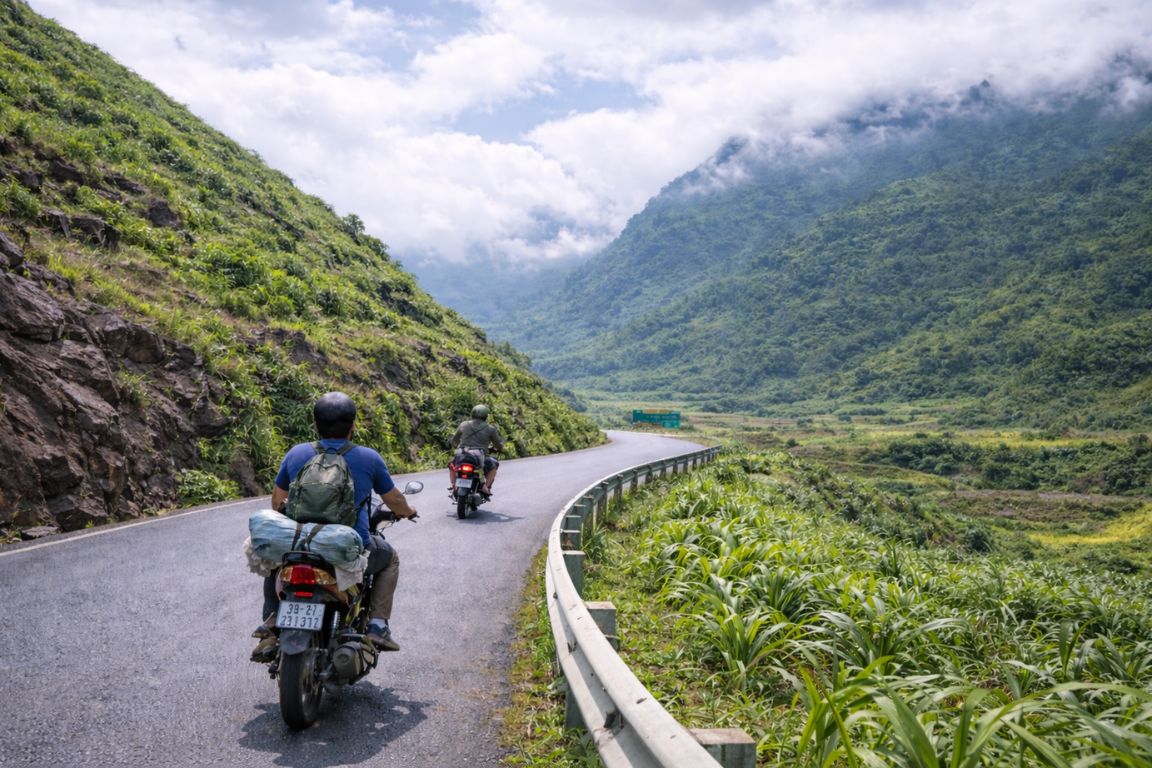
Yes, and specifically insurance that explicitly covers motorbike riding, since a large share of standard travel insurance policies either exclude motorcycling and moped use entirely or only cover it as a paid add-on, which means the default policy many travelers already own may not actually protect them on a motorbike trip like the Ha Giang Loop. This applies whether you're self-riding or riding pillion on a guided tour, coverage gaps aren't limited to people driving themselves.
This isn't a Vietnam-specific quirk, it's a well-known pattern across the travel insurance industry generally: motorcycling is treated as a higher-risk activity than most standard travel, alongside things like scuba diving or extreme sports, and insurers price and structure policies accordingly. The mistake most riders make is assuming their existing travel insurance, bought for a general Southeast Asia trip, automatically extends to a multi-day mountain motorbike loop. Often it doesn't, without checking the policy wording directly.
Why standard travel insurance often doesn't cover motorbike riding
Many travel insurance policies carry a standard exclusion for motorcycling, or for riding above a certain engine size, and treat it the same way they treat other higher-risk activities: covered only with a specific add-on, an upgraded policy tier, or not covered at all. This is a structural feature of how the travel insurance industry prices risk, not a hidden trick by any one insurer, but it catches out travelers who assume "travel insurance" is a single uniform product.
| What to check | Why it matters |
|---|---|
| Does the policy mention "motorcycling," "moped" or "scooter" at all? | If it's silent on the activity, don't assume that means covered, contact the insurer directly to confirm |
| Is there an engine size (cc) threshold? | Some policies cover smaller engines by default but require an add-on above a certain cc, common on the semi-automatic bikes used on the loop |
| Is riding as a passenger treated differently from riding as the driver? | Some policies distinguish pillion passengers from riders, relevant if you're on a guided easy rider tour rather than self-riding |
| Is there a separate "adventure sports" or "hazardous activities" add-on? | Motorcycling is frequently bundled into this category rather than covered under the base policy |
| Does the exclusion apply only off-road, or to all motorcycling? | Wording varies significantly, some policies only exclude off-road or racing use, others exclude all motorcycle riding |
None of this means motorbike travel insurance is hard to find, it generally isn't, but it does mean the checking has to happen before you ride, not after an incident when it's too late to change your policy.
Licensing and the International Driving Permit: the real gotcha
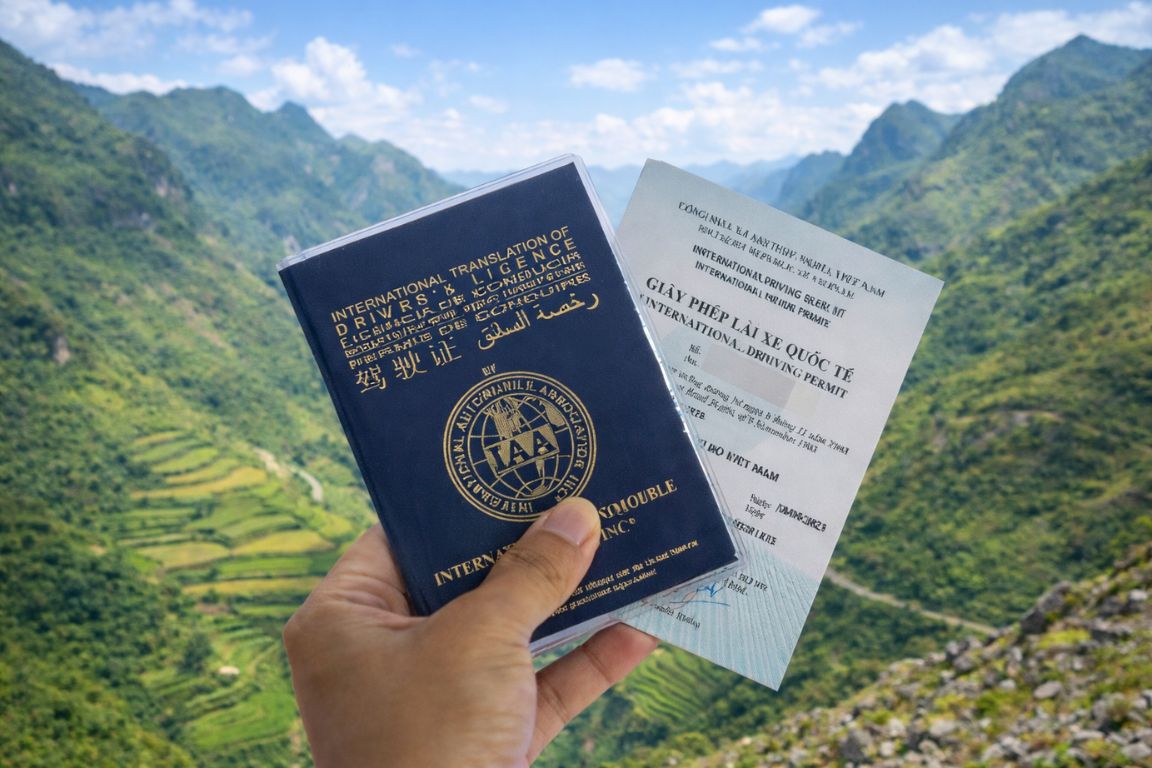
Many insurers require the rider to hold a valid motorcycle license for coverage to apply, and in Vietnam a domestic license from your home country alone often does not satisfy this requirement, an International Driving Permit (IDP), or in some cases a Vietnamese-recognized license, is frequently what's actually needed for both legal riding and for a claim to be honored. This is one of the most common and most avoidable ways travelers lose coverage: they hold a valid license at home, assume that's sufficient, and only discover the gap when a claim is denied.
This licensing question sits alongside, but separately from, the motorbike-coverage question above. A policy could technically cover motorcycling and still deny a specific claim if the rider wasn't legally licensed to ride in Vietnam at the time. Our guide on whether you need a license for the Ha Giang Loop covers the legal requirements in more depth, this insurance guide is specifically about how licensing status affects whether a claim gets paid, which is a related but separate question.
| Licensing scenario | What to check with your insurer |
|---|---|
| Home-country motorcycle license only | Ask explicitly whether this alone satisfies the policy's licensing requirement in Vietnam |
| Home-country license plus an IDP | Generally the stronger position, but confirm your insurer recognizes IDPs from your issuing country |
| No motorcycle license at all | High risk of both a legal issue and a denied claim, most guided tours where a driver rides for you sidestep this entirely |
| Riding pillion on a guided tour, not driving | Ask whether the policy's licensing requirement even applies to passengers, this varies by insurer |
What to check before buying a policy
Before buying, confirm in writing (not just verbally) that the policy covers motorbike or moped riding at the engine size you'll actually ride, covers the country you're in, doesn't require a licensing standard you can't meet, and includes medical evacuation, since a mountain route like the Ha Giang Loop is remote enough that evacuation logistics matter more than on a typical city trip. Reading the policy document itself, specifically the exclusions section, rather than relying on a summary or a sales page, is the only reliable way to know what you're actually covered for.
| Checklist item | Why it's worth the extra five minutes |
|---|---|
| Motorcycling explicitly listed as covered, not just "not excluded" | Silence on an activity is not the same as coverage, insurers can deny claims for activities the policy simply didn't address |
| Engine size (cc) limit, if any, matches what you'll actually ride | The semi-automatic bikes commonly used on the loop vary in engine size between rental shops |
| Licensing requirement you can actually satisfy | Confirm whether an IDP is sufficient before you travel, not after |
| Medical evacuation included, with a realistic coverage limit | Ha Giang's mountain roads mean evacuation from a remote stretch is a genuinely more involved logistics problem than from a city |
| Coverage applies whether self-riding or as a tour passenger | Don't assume being on a guided tour changes your personal coverage status, check specifically |
| Belongings and gear coverage limit is realistic for what you're carrying | Phones, cameras and riding gear add up, check the per-item and total limits |
Self-ride versus guided tour: does the insurance question differ?
The core insurance question, does your policy cover motorbike riding and does your license satisfy its requirements, applies whether you're self-riding or riding pillion on a guided easy rider tour, though some policies do distinguish between driving yourself and being a passenger, which is worth confirming directly with your insurer rather than assuming either way. Choosing a guided tour over self-riding reduces your riding risk in practice, but it does not automatically resolve an insurance gap on its own.

If you're weighing self-riding against booking a guide, our cost and budget guide and our page on how to plan a Ha Giang trip both cover that decision from a planning and cost angle. This page is specifically about making sure whichever option you choose is actually covered on paper, not just in practice.
What happens if you ride without valid coverage
Riding without valid motorbike coverage means that if something goes wrong, a fall, an injury, a damaged bike, medical costs and any related expenses become the rider's direct financial responsibility rather than something a policy absorbs, which on a remote mountain route can mean a materially larger bill than the same incident would cost at home. This isn't about scaring anyone off the loop, thousands of people ride it safely every year, it's about making sure the financial safety net you think you have is actually there.
The practical fix is straightforward even if it takes a bit of homework: read your policy's exclusions section, call the insurer directly if anything is ambiguous, and buy the right add-on or upgraded policy before you travel rather than assuming your existing coverage extends to a motorbike trip it was never sold to cover.
Medical evacuation and remote-area coverage
Because parts of the Ha Giang Loop are genuinely remote, with mountain roads far from major hospitals, medical evacuation coverage with a realistic limit matters more here than it would on a typical city-based trip, and it's worth confirming your policy's evacuation limit rather than assuming a standard policy's default figure is sufficient for a remote mountain incident. This is a general feature of remote-area travel insurance, not something specific to Vietnam or this route, but it's especially relevant given how far some stretches of the loop sit from significant medical facilities.
When comparing policies, evacuation coverage is one of the line items worth reading closely rather than skimming past, alongside the motorbike-specific exclusions covered above.
Gear and belongings coverage
Check your policy's coverage limits for belongings and gear, including your phone, camera, power bank and any riding gear you've purchased, since these items travel exposed to weather, dust and the general wear of several days on a motorbike or in an open-air jeep, and a policy's default belongings limit may be lower than what you're actually carrying. This is a lower-stakes check than the motorbike and licensing questions above, but worth five minutes given how central a phone and camera are to most people's trip.
If you're packing gear worth protecting, our Ha Giang Loop packing list covers what's genuinely worth bringing, useful context for deciding whether your policy's belongings limit is realistic for what's actually in your bag.
How to buy the right policy, step by step
Start by listing exactly what you'll be doing (self-riding or riding pillion, what engine size, how many days), then search specifically for policies or add-ons that name motorbike or moped riding rather than general "adventure sports" wording, confirm the licensing requirement against what you'll actually hold (a domestic license, an IDP, or both), and get evacuation and belongings limits in writing before paying. This sequence takes longer than clicking through a default checkout option, but it's the difference between assuming you're covered and actually knowing it.
None of this requires expert knowledge, it requires reading the policy document itself rather than a marketing summary, and calling the insurer if anything is unclear. That single habit, reading the exclusions section before you buy, resolves the large majority of Ha Giang Loop insurance surprises before they happen.