Dong Van: Old Quarter, Karst Geopark, and Vuong Family Palace
Dong Van is where the Ha Giang Loop stops being a scenic drive and starts feeling like a genuinely different place. It's a small town wrapped in some of the starkest limestone karst scenery in Vietnam, with a 100-year-old market square and a fortress-like mansion built by a H'mong opium baron sitting just up the road. Almost every loop itinerary spends a night here, and for good reason.
Booking choice: Ride through Dong Van and Ma Pi Leng, take the Nho Que boat trip, then spend the second night in Du Gia. Check dates for the 3-day Easy Rider ↗
Your selections need confirmation. Adjust them in the trip comparison below.
In brief: Match the named stops and overnight towns to your plan. Confirm the riding format, travel days and inclusions before choosing a departure.
What Is Dong Van and Why Do Loop Riders Stop There?
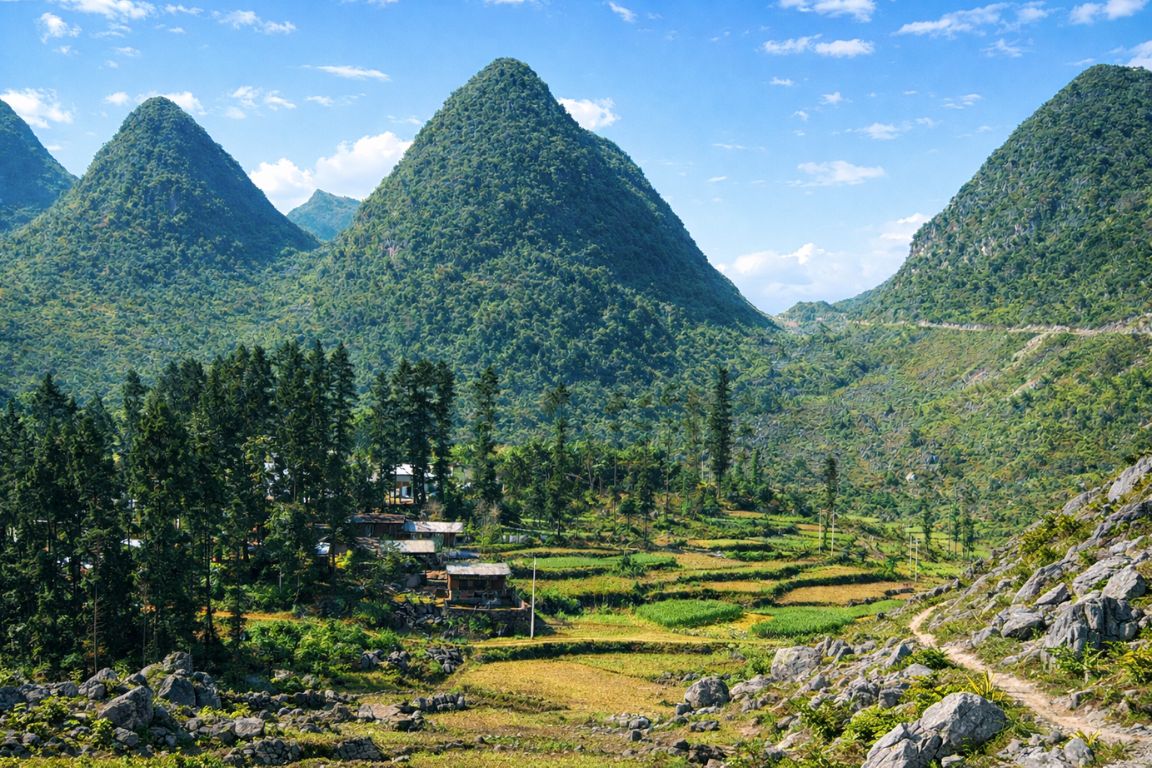
Dong Van is a small district town roughly 190km from Ha Giang city, sitting at the heart of the Dong Van Karst Plateau Geopark near the Chinese border, and it's the overnight stop where nearly every multi-day loop itinerary spends its second or third night. The town itself is compact, built around a stone-paved old quarter that's well over a century old, with karst peaks visible from almost every street.
What makes Dong Van worth a dedicated stop rather than a quick photo pass is the combination sitting within a few kilometers of each other: the old quarter's stone houses and Sunday market, the wider geopark's karst landscape, and the Ma Pi Leng Pass just outside town toward Meo Vac. Few towns on the loop pack this much into one overnight stop.
How Do You Get to Dong Van and How Far Is It?
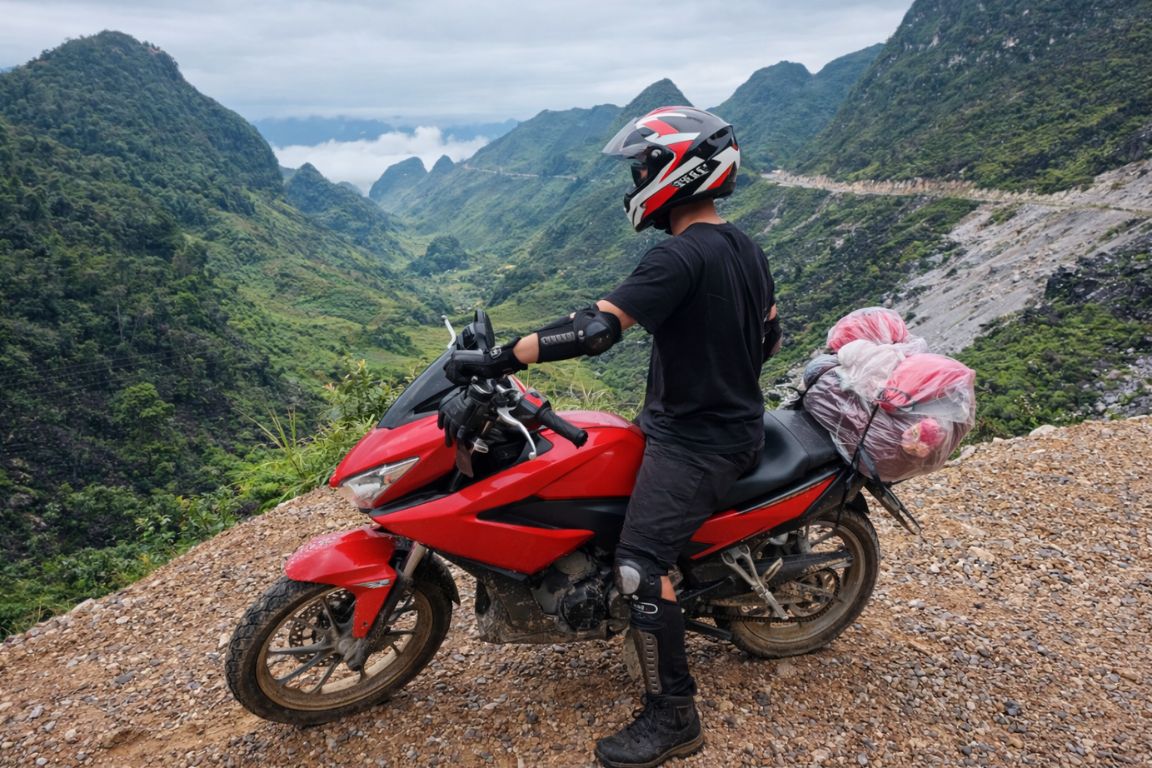
Dong Van sits about 190km from Ha Giang city by road, normally reached over one to two days of riding through Quan Ba and Yen Minh, and it's not realistically a day-trip destination from the city given the mountain roads involved. Riders doing the full counterclockwise loop typically arrive in Dong Van on day two, after an overnight in Yen Minh, or occasionally push through in a single long first day on a jeep tour.
| From | Distance | Typical time |
|---|---|---|
| Ha Giang city | ~190km | Full day+ riding, usually split over 2 days |
| Yen Minh | ~50km | 1.5-2 hours |
| Meo Vac (via Ma Pi Leng Pass) | ~20km | 45-60 minutes |
| Quan Ba (Heaven's Gate) | ~110km | Half a day with stops |
See the full route explained with map and stops for exactly how Dong Van fits between Quan Ba, Yen Minh, and Meo Vac on a standard counterclockwise circuit.
What Is the Dong Van Karst Plateau Geopark?
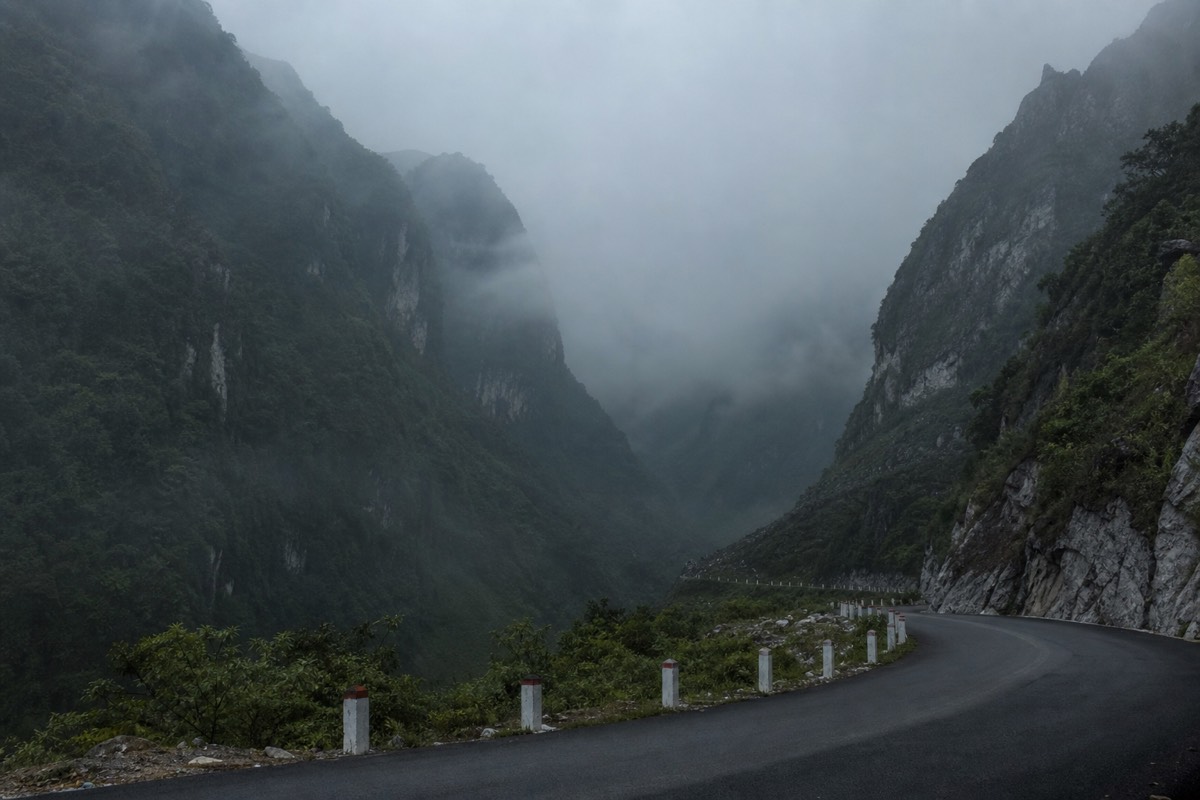
The Dong Van Karst Plateau Geopark was recognized as a UNESCO Global Geopark in 2010, the first in Vietnam, covering a high limestone plateau across four districts including Dong Van, marked by dramatic karst peaks, deep valleys, and rock formations shaped over hundreds of millions of years. The geopark isn't a single fenced-off site; it's the landscape the entire northern half of the loop rides through, and Dong Van town sits close to its center.
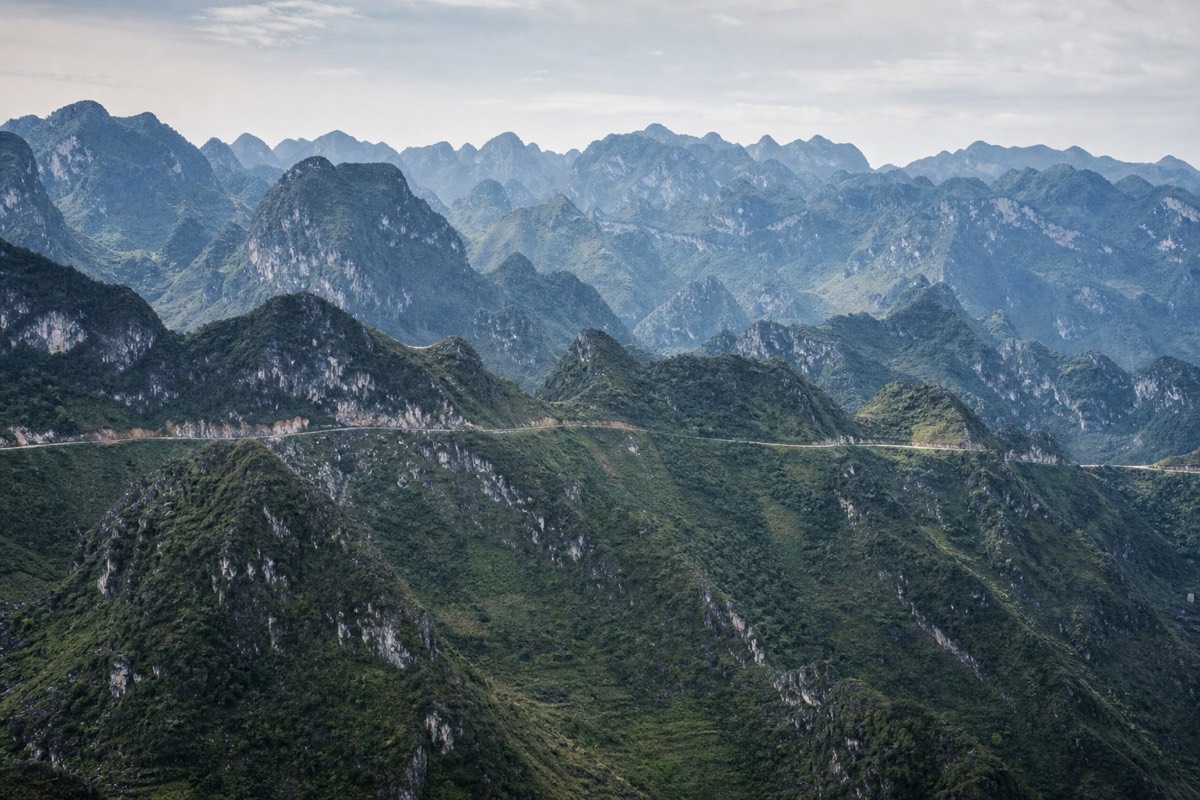
What makes the geopark distinct from generic mountain scenery is the density and sharpness of the karst peaks, jagged grey limestone spires and ridgelines that rise straight out of narrow valleys, with terraced fields wedged into whatever flat ground exists between them. UNESCO recognition brought some infrastructure and protection to the area, but the geopark still feels remote and lightly developed compared to better-known karst regions elsewhere in Vietnam.
What's in Dong Van's Old Quarter?
Dong Van's old quarter is a small cluster of century-old stone houses built by Chinese and H'mong traders around a central market square, with weathered clay-tile roofs and thick earthen walls that have held up through decades of mountain winters. Unlike heavily restored old quarters elsewhere in Vietnam, Dong Van's still feels lived in rather than staged for visitors, with families running small shops and guesthouses out of the same buildings their grandparents used.
| Feature | Detail |
|---|---|
| Age | Most core buildings over 100 years old |
| Architecture | Stone/earthen walls, tiled roofs, built by Chinese and H'mong traders |
| Evening scene | Lanterns lit around the market square, small cafes and bars open |
| Best time to walk it | Early evening, after riders have checked into guesthouses |
Evenings are when the old quarter comes alive. Lanterns go up around the square, a few cafes and low-key bars open their doors, and it becomes the natural gathering point for riders finishing a long day on the road. It's a good, low-effort way to close out a day that started at Quan Ba or Yen Minh.
What Happens at the Dong Van Sunday Market?
The Dong Van Sunday market draws H'mong, Tay, and other ethnic minority communities from surrounding villages into the old quarter to trade produce, livestock, textiles, and local specialties, and it's the single busiest, most colorful day the town sees all week. If your itinerary allows any flexibility, timing your stay in Dong Van to include a Sunday is worth the effort.
The market fills the old quarter's square and surrounding lanes from early morning, with vendors laying out everything from woven fabric and silver jewelry to fresh vegetables and local corn wine. It's a working market for the people who live in the surrounding highlands first, and a photogenic scene for visitors second, which is exactly what makes it worth seeing rather than a staged tourist event.
What Is the Vuong Family Palace?
The Vuong Family Palace is a fortress-like mansion built in the early 20th century by Vuong Chinh Duc, a H'mong clan leader who controlled the regional opium trade under French colonial rule, and it sits a short ride outside Dong Van town, blending Chinese, French, and H'mong architectural styles. The building's thick stone walls, watchtowers, and defensive layout reflect the wealth and precarious power its original owner held in a remote, contested borderland.
| Detail | Info |
|---|---|
| Distance from Dong Van old quarter | Short ride, easily combined with a town visit |
| Built by | Vuong Chinh Duc, H'mong clan leader |
| Style | Mix of Chinese, French colonial, and H'mong design |
| Why it's worth the stop | Rare intact look at regional power and wealth from a century ago |
Inside, the palace's courtyards and timber-framed rooms are largely preserved, giving a real sense of how the family lived and how they fortified the compound against rival clans and shifting colonial politics. Most loop tours that overnight in Dong Van build in time for this stop either on arrival or the following morning, since it sits so close to town.
How Much Time Should You Spend in Dong Van?
One overnight is standard and enough to see the old quarter, walk the market square, and visit the Vuong Family Palace, though riders who want to catch a Sunday market or spend real time in the wider geopark sometimes add a second night. Rushing through in daylight hours only, without staying overnight, means missing the lantern-lit evening scene in the old quarter, which is one of the best atmospheric moments on the whole loop.
| Time available | What you can realistically cover |
|---|---|
| Half day, no overnight | Old quarter walk-through, quick market square photos |
| One overnight (standard) | Evening in old quarter, morning Vuong Family Palace visit |
| Two nights | All of the above plus a Sunday market if timing allows, more geopark time |
For most travelers working out how many days they need for the full loop, a single night in Dong Van fits neatly into a standard 3 to 4-day itinerary without forcing cuts elsewhere.
What's the Weather Like in Dong Van?
Dong Van sits at higher elevation than Ha Giang city, so it runs noticeably cooler, especially at night, with the peak buckwheat bloom season around mid-October through early November bringing the best combination of clear skies and scenery, but also the heaviest crowds and tightest accommodation. Winter months from December through February can bring cold mornings and occasional fog that lingers over the karst peaks until midday.
Because Dong Van is a fixed overnight stop for so many tours, its guesthouses sell out fastest of any town on the loop during peak season. If you're traveling in October or early November, book accommodation well ahead rather than assuming you'll find a room on arrival. See the full best time to do the Ha Giang Loop guide for a complete month-by-month breakdown.
Which Tours Include an Overnight in Dong Van?
Nearly every tour of two nights or longer includes an overnight in Dong Van, since it's the natural midpoint stop between Ha Giang city and the loop's far end near Meo Vac and Ma Pi Leng Pass. Shorter one and two-day tours generally don't reach Dong Van at all, or pass through it briefly without an overnight stay.
| Tour | Length | Rating |
|---|---|---|
| 3-Day/2-Night Ha Giang Loop with Private Room (Free Hotel Night Before) | 60h | 5 stars, 9,400+ booked |
| Ha Giang Loop: 4D/3N Easyrider 150cc (Small Group + Private Rooms) | 96h | 5 stars, 3,246+ booked |
| Hanoi: 2 or 3-Day Ha Giang Loop Motorbike Tour with Easy Rider | 72h | 4.9 stars, 6,041+ booked |
| 3-Day Ha Giang Loop: Private Jeep Adventure | 4h transfer + 3 days | 5 stars, 2,476+ booked |
These itineraries build in a Dong Van night before continuing on to Ma Pi Leng Pass and Meo Vac the following day, which is the natural next leg of the loop.
How Does Dong Van Fit Into the Wider Loop?
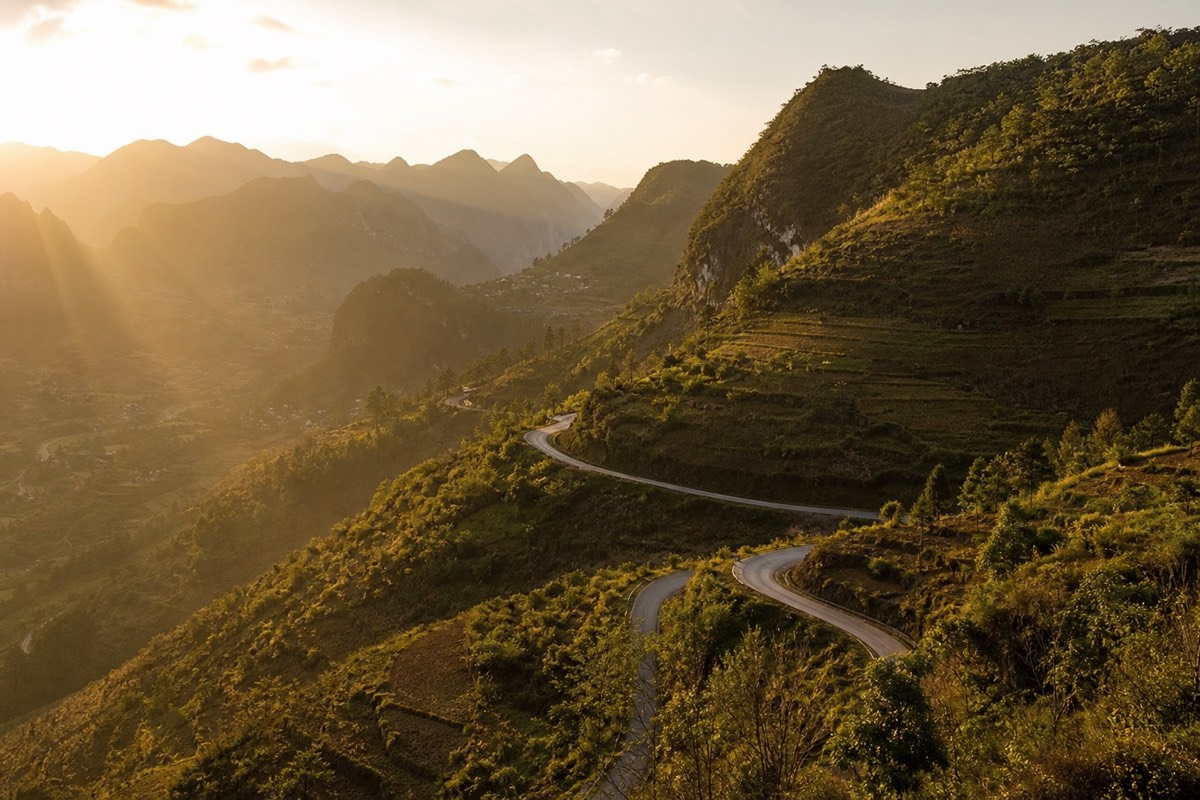
Dong Van sits roughly two-thirds of the way through a standard counterclockwise loop from Ha Giang city, positioned as the natural overnight stop before the ride crosses Ma Pi Leng Pass toward Meo Vac. It's less a detour than a hinge point, the place where the loop's early scenic-but-gentler roads give way to its most dramatic karst scenery.
Combined with a look at the best stops on the Ha Giang Loop and the route explained with map and stops, Dong Van should anchor the middle of your itinerary planning, not an afterthought squeezed in on the way to somewhere else. Most riders who've done the loop rank their Dong Van evening among the best few hours of the whole trip.